Security and Fire System Maintenance for Care Homes: SSAIB Contracts
Do you actually understand what your care home security maintenance SSAIB Insurance Approved CQC contract in the North West covers?
Let’s be real. Most care home managers sign a maintenance contract, file it away, and hope it keeps CQC quiet. Then inspection day arrives and everyone is scrambling for certificates, logbooks and proof. Not ideal.
Care homes are not ordinary buildings. You have vulnerable residents, night staff, medication stores and serious legal duties. Fire and security systems are not optional extras. They are life safety systems. If one fails, you are not just dealing with paperwork. You are dealing with risk to real people.
That is where structured maintenance and monitoring contracts from iSecurity Solutions come in. Properly designed, SSAIB certified and Insurance Approved agreements keep you compliant, covered and ready for CQC across the North West.
iSecurity Solutions is a trusted UK provider of commercial and domestic security systems. We help homes and businesses stay protected around the clock. From CCTV and intruder alarms to fire safety, access control and construction site monitoring, our expert team designs reliable and tailored solutions. Every system is backed by responsive service and modern remotely monitored technology. Whether you manage one care home or multiple sites, we deliver the equipment, expertise and peace of mind to keep people safe.
Security And Fire System Maintenance For Care Homes Under SSAIB Contracts
Cut the nonsense. A contract is not just a piece of paper. It is your evidence trail when an inspector starts asking questions.
If you operate in the North West, your agreement should link directly to your fire safety systems, CCTV coverage and intruder alarm protection. It should clearly state service intervals, response times and reporting procedures. If it does not, what exactly are you paying for?
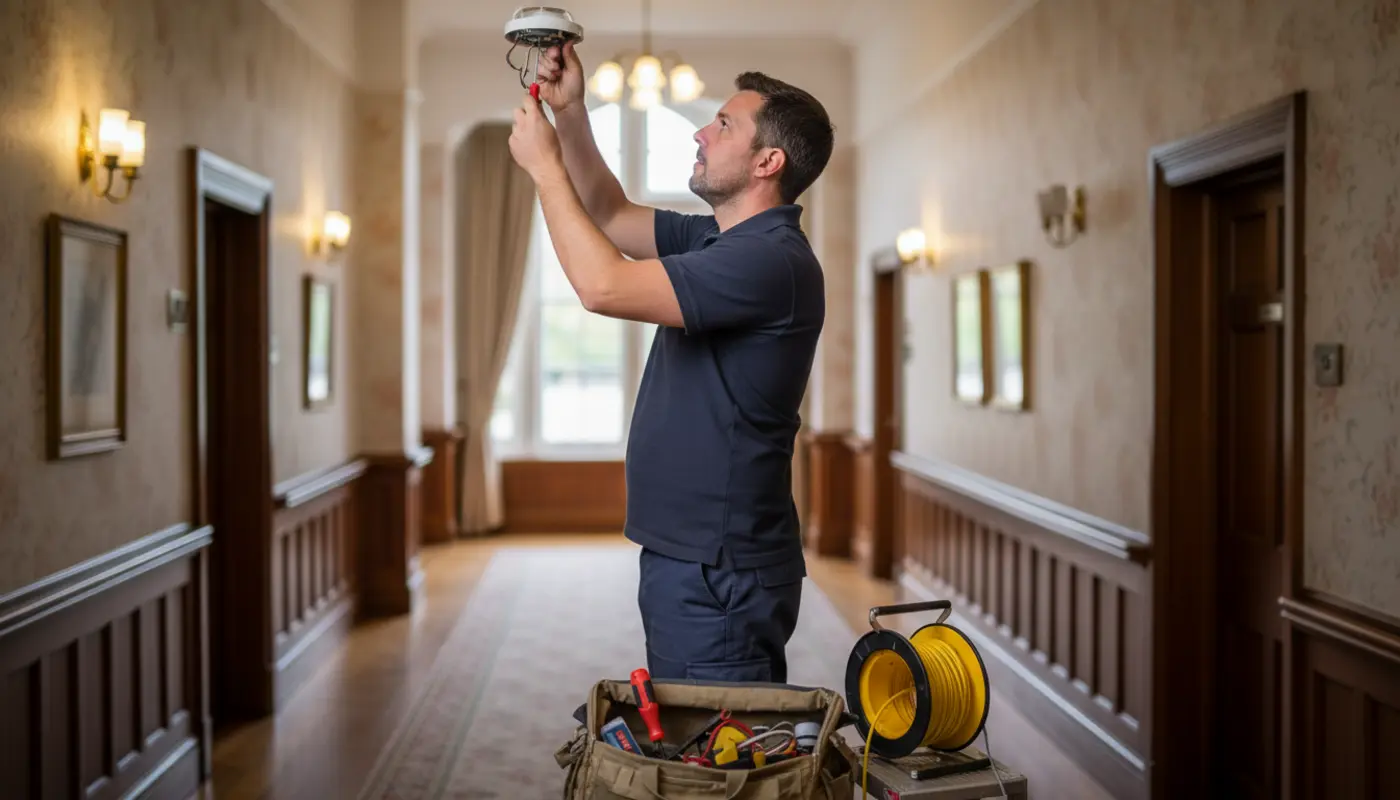
Under the Regulatory Reform Fire Safety Order 2005, the Responsible Person must ensure fire precautions are maintained in efficient working order. You can read the official guidance on GOV.UK fire safety legal duties. The law is clear. Maintenance is mandatory.
CQC then checks whether you can prove it. No proof. No pass.
Understanding CQC And Regulatory Duties
Obviously, CQC is not a fire engineer. But they expect you to manage risk properly.
They will ask for your fire risk assessment, servicing records and evidence of action taken. If weekly tests are missing or your six monthly service is overdue, that becomes a governance issue. Not just a technical one.
Here is what is actually happening. Fire safety sits under the Fire Safety Order. Care quality sits under health and social care regulations. In the real world they overlap. If your alarm fails and residents are at risk, CQC cares.
When was the last time you checked that every certificate could be produced within ten minutes?
BS 5839 Compliance In Residential Care Settings
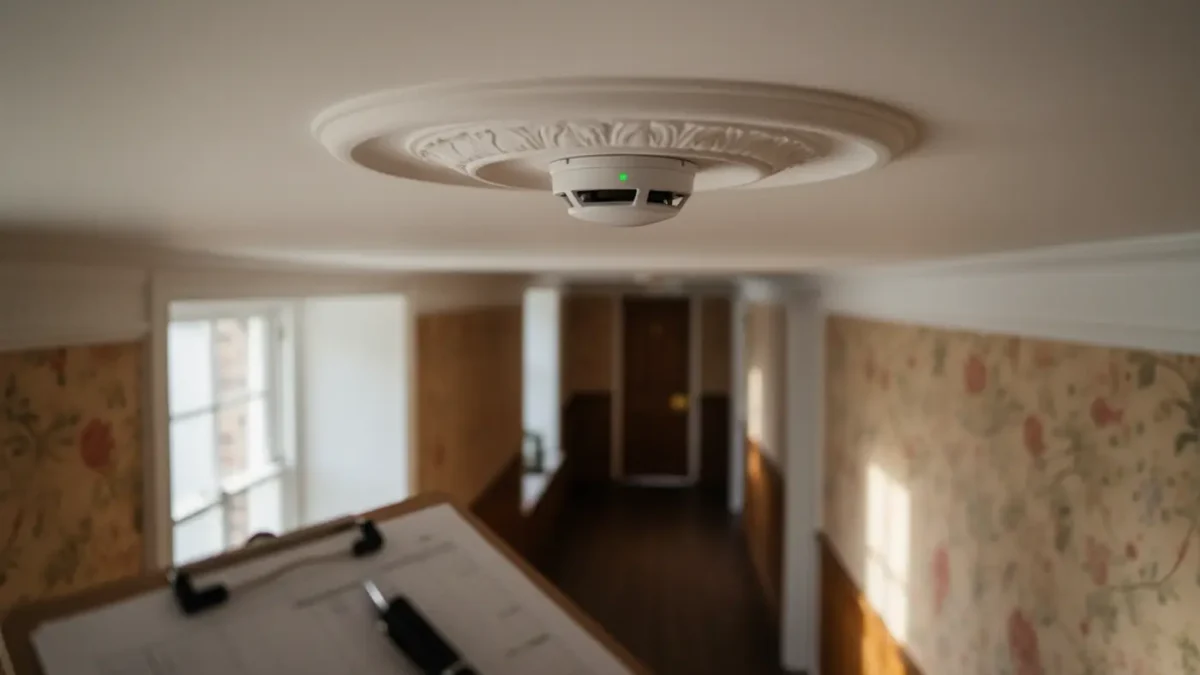
Care homes usually require a Category L1 system under BS 5839 1. That means automatic detection in all areas of the building. It gives maximum life protection. Your residents cannot evacuate quickly on their own.
BS 5839 1 sets clear rules for commissioning, maintenance and record keeping. Systems are normally serviced every six months with weekly user tests. If you are unsure about testing frequency, see our guide on how often fire alarms should be tested.
Emergency lighting must comply with BS 5266. You need monthly function tests and an annual full duration test. Miss those and your evacuation plan fails during a power cut.
Fire extinguishers must meet BS 5306 and be serviced under BAFE SP101. You need an annual service certificate. Insurers expect it. CQC will ask for it.
Intruder Alarm Standards Under EN 50131
Stop pretending an intruder alarm is only about burglars. In a care home it protects medication, confidential records and residents’ property.
Intruder systems must comply with EN 50131. Most care homes fall under Grade 2 or Grade 3 depending on risk. High value medication stores often justify Grade 3. If you are guessing the grade, that is a problem.
When installed by an SSAIB certified and Insurance Approved provider, your system can qualify for a Police Response URN. No SSAIB certified and Insurance Approved installer. No URN. It is that simple.
Maintenance matters here too. Faulty detectors or flat batteries break compliance and can affect insurance cover. Try explaining to a family that medication was accessed because a detector fault was ignored.
Scheduled Preventive Maintenance Under SSAIB Certified And Insurance Approved Contracts
This is where a proper SSAIB certified and Insurance Approved maintenance contract proves its value.
Planned preventive maintenance should include:
- Six monthly fire alarm service
- Weekly user testing
- Annual emergency lighting duration test
- Intruder alarm inspection
- CCTV system health check
- Access control audit
- Manual call point verification
Each visit must generate a detailed report. Not a quick signature. A clear document listing devices tested, faults found and actions taken.
In the North West, many providers combine this under SSAIB certified and Insurance Approved security maintenance contracts. One point of contact. One clear audit trail. Less stress.
Fire Risk Assessment Integration And PAS 79
Your fire risk assessment should follow PAS 79. Not a generic template downloaded the night before inspection.
Here is the bit people ignore. Maintenance findings must feed back into your risk assessment. Repeated false alarms. Update the assessment. Detection gaps. Update the assessment.
If you need a starting point, our article on fire risk assessments for businesses in Manchester explains how structured reviews support compliance.
Warden Call And Nurse Call Systems
Bluntly, a nurse call system that fails at 2am is not a small issue. It is a safeguarding risk.
These systems should be inspected and tested at least annually. Batteries must be checked and device integrity confirmed. They form part of your overall safety framework alongside fire and security systems.
Integration with access control and CCTV can improve response times, especially for wandering residents. See how this works in our guide to access control for care homes in the North West.
CCTV Access Control And GDPR Reality Check
Installed cameras everywhere and called it safeguarding. Come on.
CCTV must comply with UK GDPR. The Information Commissioner’s Office provides clear guidance on CCTV and video surveillance obligations. You need a lawful basis, clear signage and controlled access to footage. If you cannot explain why a camera is there, it should not be there.
If your system is linked to police response and it was not installed and maintained by an SSAIB certified and Insurance Approved provider, you risk losing that response status. That is procedural reality.
Access control protects residents and staff. It must still allow safe escape during a fire. That balance is non negotiable.
Record Keeping And Audit Trails For CQC
Inspectors expect to see:
- Up to date fire risk assessment
- Maintenance certificates
- Weekly fire alarm test logs
- Emergency lighting records under BS 5266
- Extinguisher service sheets under BS 5306 and BAFE SP101
- False alarm reports
- Staff training evidence
If it is not written down, it did not happen.
Your SSAIB certified and Insurance Approved maintenance certificates show that systems are serviced by a competent third party. That supports insurer requirements and Police Response URN eligibility where applicable. It also gives CQC confidence.
Selecting And Reviewing SSAIB Certified And Insurance Approved Contractors
Not all contracts are equal. Stop choosing on price alone.
Check that the provider is SSAIB certified and Insurance Approved. Confirm experience in care settings. Ask about technician training and ongoing CPD. When did you last review your SLA properly?
Review response times for critical faults. Do they offer 24 hour support. Are reports digital and easy to access?
Review performance each year and align it with your PAS 79 fire risk assessment review and governance meetings. If your contractor is reactive instead of proactive, you already know what to do.
At iSecurity Solutions commercial services, contracts are built around compliance first. No gimmicks. Just clear standards, proper maintenance and real accountability.