How Perimeter Security for Steel Yards in Greater Manchester Works
Perimeter Security For Steel Yards In Greater Manchester
Perimeter security for steel yards in Greater Manchester is about much more than putting up a fence and installing a few cameras. If you manage a steel stockholding or fabrication yard, you already know the risks are real. Metal theft, trespass and organised crime continue to affect industrial sites across the North West, and insurers are paying close attention.
The big question most yard owners ask is simple. Is the site properly protected, and will the insurer fully support a claim if something goes wrong? Meeting insurer expectations means following recognised standards, using certified installers and keeping clear records. It may sound complicated at first, but when you break it down, the process is practical and manageable.
At iSecurity Solutions, a trusted UK provider of commercial and domestic security systems, steel yards across Greater Manchester receive tailored perimeter designs that meet Insurance Approved requirements and support Police Response URN eligibility. From CCTV and intruder alarms to access control and fire safety, every solution is built around real site risks while keeping operations running smoothly.
How Perimeter Security For Steel Yards In Greater Manchester Works
A compliant perimeter usually rests on three clear foundations. Physical protection such as fencing and secure gates. Electronic systems including CCTV, intruder alarms and access control. Third party certification, most notably SSAIB. When these elements work together, they create a layered defence that insurers recognise and trust.
SSAIB is a UKAS accredited certification body for security providers. When your systems are installed by an SSAIB certified company, they become Insurance Approved and, where required, eligible for a Police Response URN. That URN is essential if you expect police attendance following a confirmed alarm activation. Insurers also expect correct system grading, documented maintenance and evidence that standards such as EN 50131 and BS EN 62676 are being followed.
Understanding The Regulatory And Standards Framework
Steel yards operate within a wider legal framework. The Scrap Metal Dealers Act 2013 requires licensing, strict record keeping and bans cash payments for scrap transactions. While the Act focuses on trading controls, it reinforces the need for strong perimeter security to prevent theft and unlawful activity.
CCTV systems should comply with BS EN 62676, the main standard for video surveillance. In simple terms, it asks what you need to see and how clearly you need to see it. For intruder alarms and perimeter detection, systems must meet EN 50131, usually Grade 2 or Grade 3 depending on risk level. Installation by an SSAIB certified, Insurance Approved company is required if you want Police Response URN eligibility.
Lighting design often follows BS 5489 principles for roads and external areas. When risk assessments are carried out, aligning with recognised standards such as BS 31111 shows insurers that your approach is structured and based on evidence rather than guesswork.
Insurance Approved Perimeter Fencing For Steel Sites
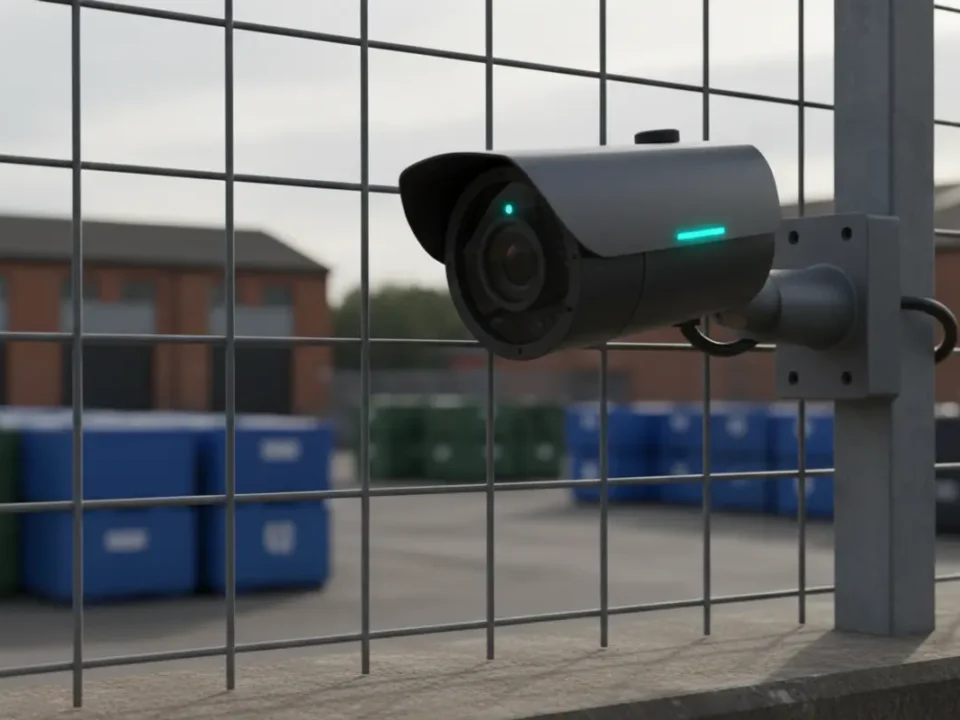
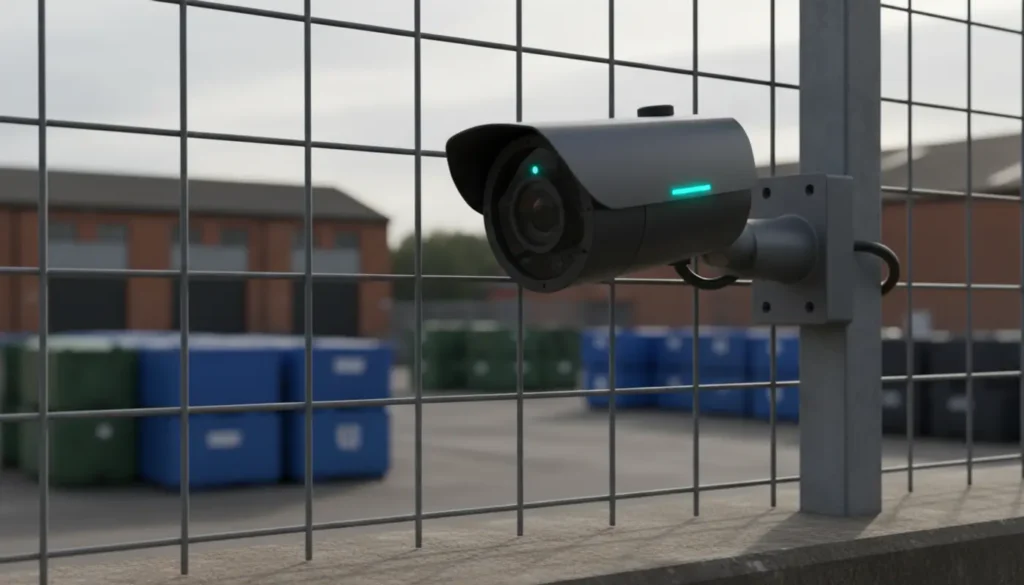
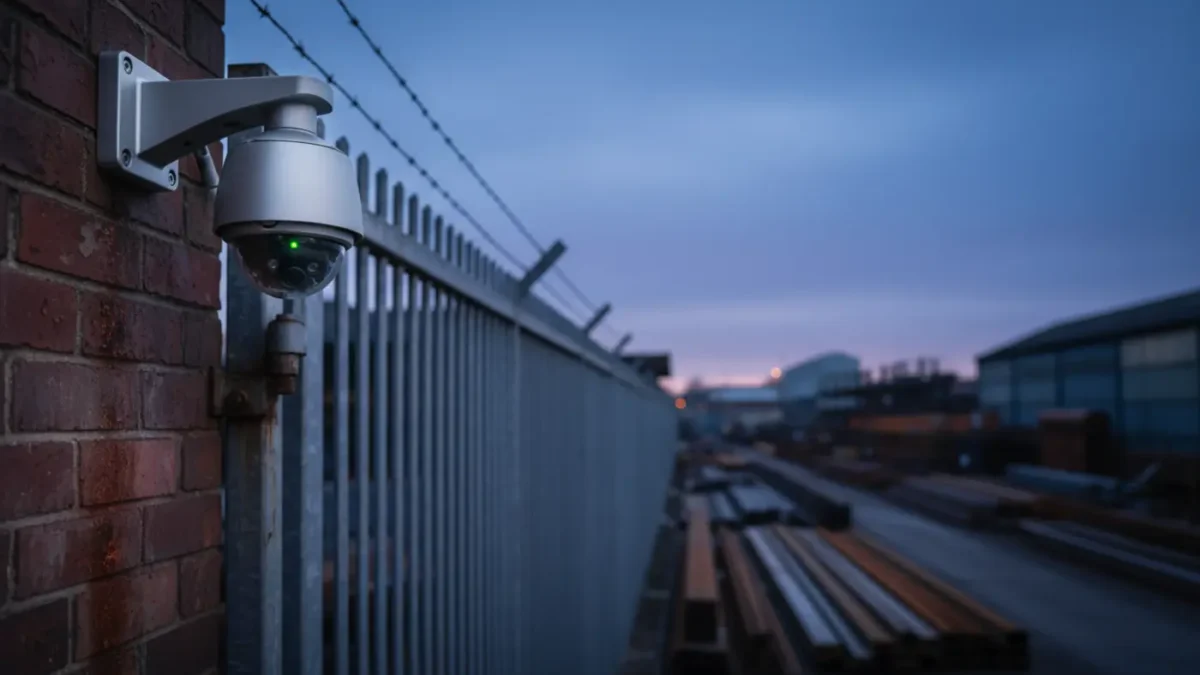
Fencing is your first line of defence. Across Greater Manchester, most steel yards use palisade or weld mesh fencing with anti climb toppings. The goal is to delay and deter. If intruders cannot enter quickly or quietly, they are far more likely to leave.
Secured by Design promotes reducing crime through strong physical measures and thoughtful layout. For steel yards, this means suitable fence height, secure gates, minimal blind spots and clear lines of sight for CCTV coverage. Fencing alone is not enough, but it forms the backbone of any effective perimeter strategy.
CCTV Systems To BS EN 62676 For Metal Yards
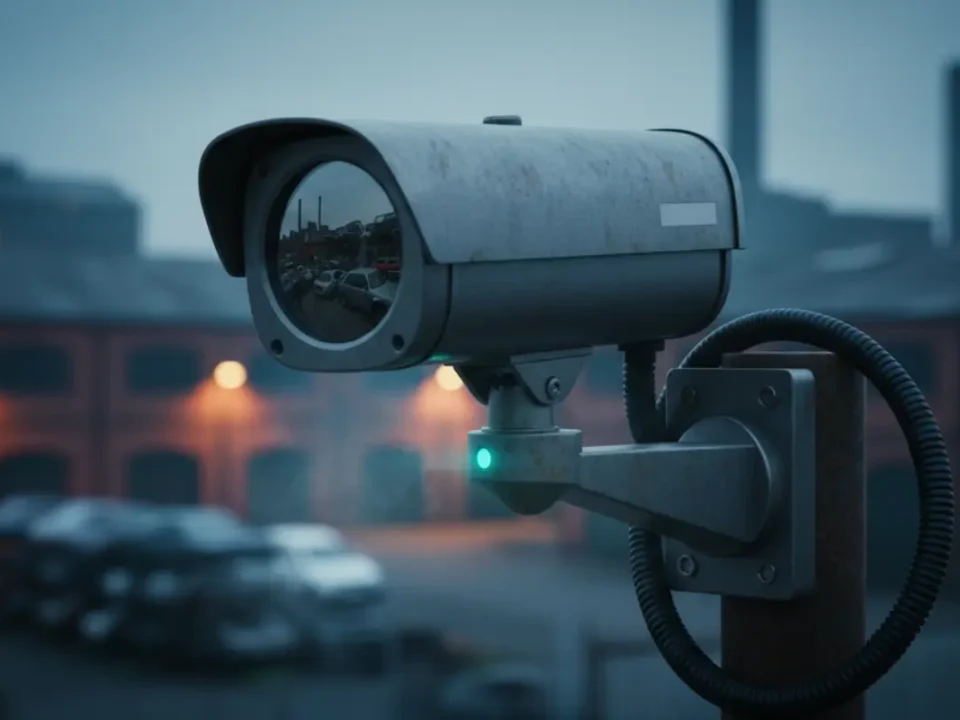
CCTV in a steel yard must do more than record general footage. Under BS EN 62676, systems are planned around clear objectives such as monitoring, detection, recognition and identification. Long fence lines may only require overview images, while gates and weighbridges often need identification level images and number plate capture.
Integrating ANPR at entry and exit points supports vehicle tracking and helps meet duties under the Scrap Metal Dealers Act. You can see similar planning in CCTV for warehouses in Manchester, where layout and image quality are matched carefully to operational risk.
All CCTV should integrate properly with EN 50131 compliant alarm systems where required and be installed by an SSAIB certified, Insurance Approved provider. This protects your eligibility for a Police Response URN if remote monitoring is included.
Intruder Alarms And Perimeter Detection To EN 50131
Perimeter detection may include fence mounted sensors, beam detection across access points or ground based systems along vulnerable boundaries. These are typically configured as part of an intruder alarm designed to EN 50131 standards.
Higher risk steel yards commonly require Grade 3 systems. If you are unsure of your current grade, it is worth checking before your next insurance renewal. When installed by an SSAIB certified company, the alarm becomes Insurance Approved and can connect to an Alarm Receiving Centre for twenty four hour monitoring. With confirmed activation procedures in place, a Police Response URN can then be issued.
For a clearer explanation of grading, the guide to SSAIB Grade 3 intruder alarms explains why higher grades are often specified for high value environments.
Access Control, Gates And ANPR Management
Uncontrolled access points create unnecessary risk, especially outside working hours. Automated gates, barriers and access control systems ensure that every vehicle and person entering the yard is authorised.
Staff can use fobs or cards, while visitors are managed through intercom systems or controlled reception points. When ANPR is integrated with CCTV built to BS EN 62676 standards, you gain a reliable log of vehicle movements. Combined with access control systems, this provides strong audit trails and reduces disputes about who was on site and when.
Perimeter Lighting Under BS 5489
Lighting is often overlooked, yet poor lighting can weaken even the best CCTV system. BS 5489 sets out recommendations for lighting roads and external areas, including brightness levels and uniform coverage.
For steel yards, good lighting improves visibility and increases the perceived risk of being seen. It should support CCTV performance without creating glare or deep shadows along fence lines. Regular maintenance is essential, because a single failed fitting in the wrong location can create an easy access point.
Risk Assessment And Security Surveys
A strong perimeter begins with a structured risk assessment. This involves identifying key assets such as stock, machinery and fuel, assessing likely threats including organised theft, mapping vulnerabilities and selecting proportionate controls based on evidence.
Clear documentation demonstrates to insurers that your perimeter security for steel yards in Greater Manchester is well planned and defensible. Where fire safety is reviewed, aligning with PAS 79 for fire risk assessments and ensuring fire alarm systems comply with BS 5839 adds further reassurance. Fire extinguishers should be maintained in line with BS 5306 and BAFE SP101, with up to date service certificates available if requested.
Working With SSAIB Certified Installers In The North West
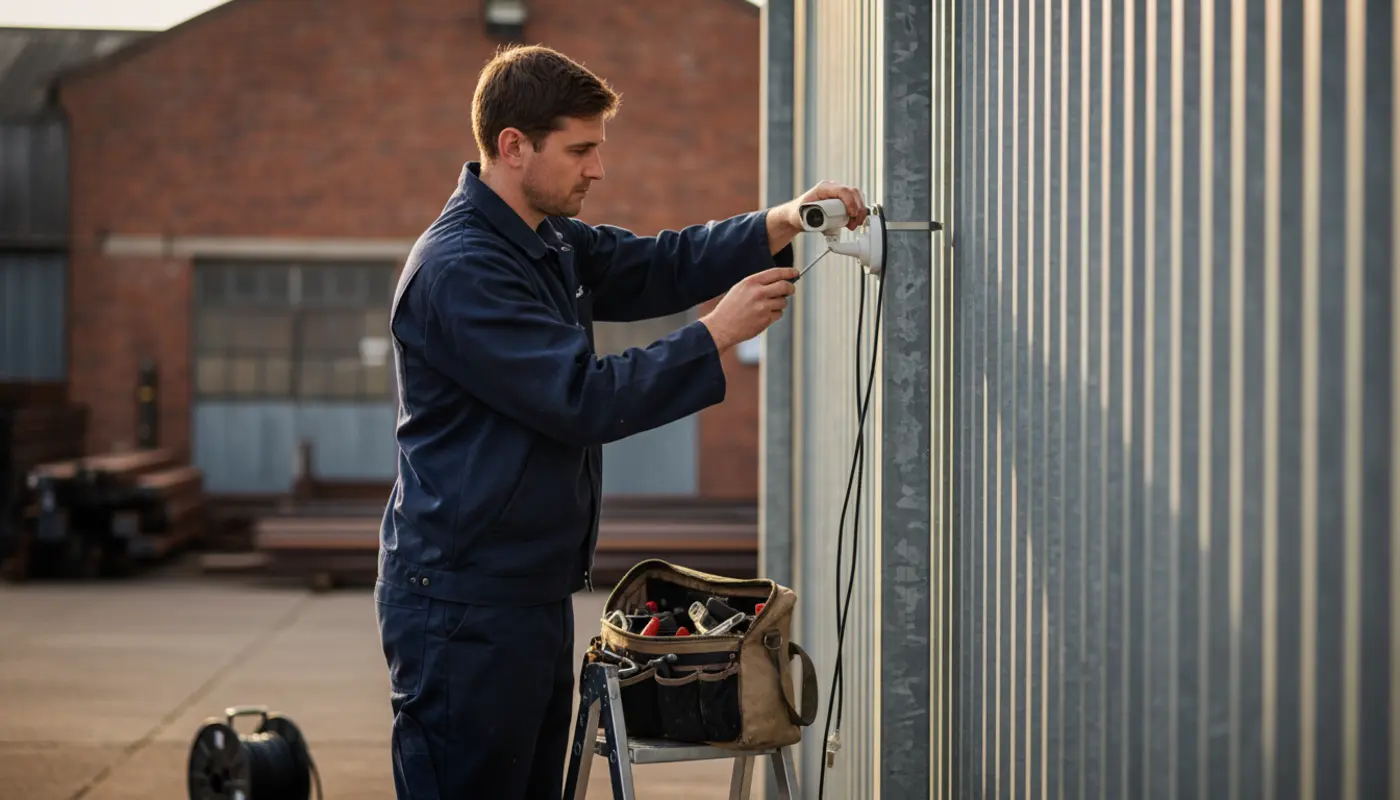
Choosing the right installer is just as important as choosing the equipment. An SSAIB certified provider has been independently assessed for competence and compliance with recognised standards.
During tender, ask for proof of current SSAIB certification, evidence of experience on heavy industrial sites and confirmation that the alarm design will support Police Response URN applications. It is also wise to understand what maintenance plan is included. The guide to security maintenance contracts in Manchester explains how structured servicing helps maintain both performance and Insurance Approved status year after year.
Bringing Everything Together For Steel Yards
Effective perimeter security is layered and balanced. It is not about turning your yard into a fortress. It is about combining robust fencing, CCTV designed to BS EN 62676, EN 50131 Grade 2 or Grade 3 intruder alarms installed by an SSAIB certified, Insurance Approved company, Police Response URN capability where required, controlled access points and lighting planned with BS 5489 principles in mind.
When these measures are supported by structured risk assessments and awareness of the Scrap Metal Dealers Act 2013, you create a practical blueprint that protects stock, supports compliance and reassures insurers. For steel yards across Greater Manchester, that peace of mind is just as valuable as the steel itself.