Perimeter Security for Waste Management Sites in the North West
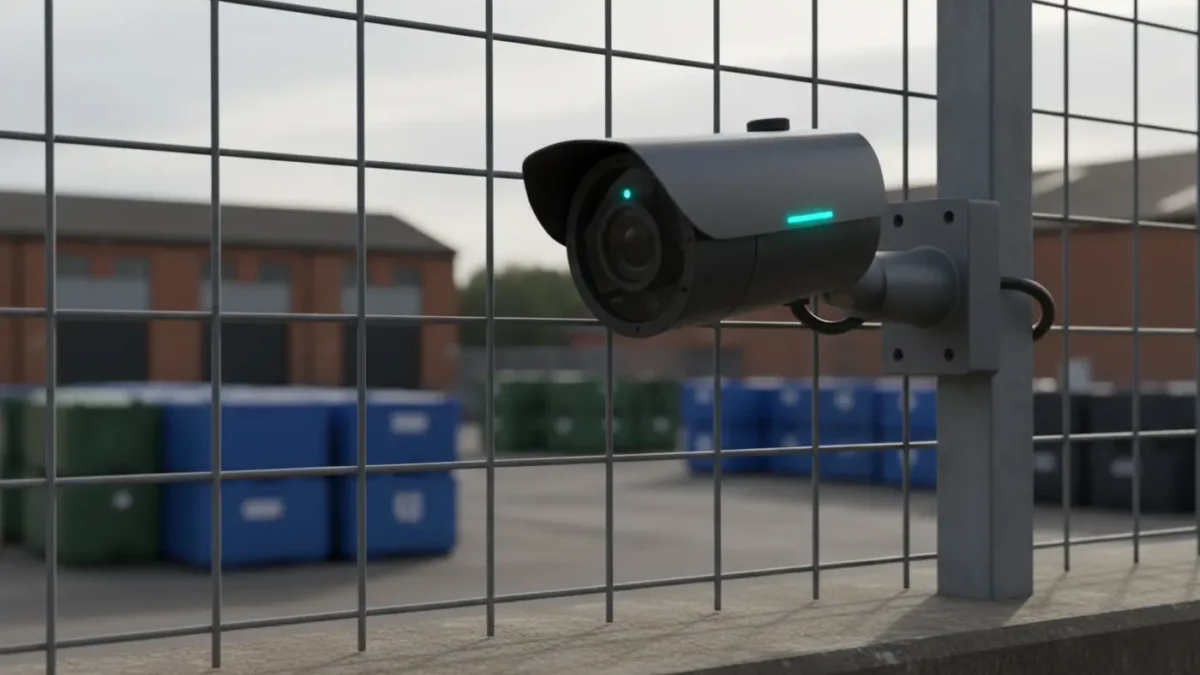
Perimeter Security For Waste Management Sites In The North West
What does effective perimeter security really look like for a busy waste or recycling site in the North West?
If you operate in Greater Manchester, Merseyside, Lancashire or Cheshire, you already know the risks are real. Fires, fly tipping, metal theft and regulatory inspections are part of daily life for many operators. It can often feel like you are balancing compliance, safety and day to day operations all at the same time.
At iSecurity Solutions, we support waste businesses with practical and compliant perimeter detection systems that align with Environment Agency expectations and HSE guidance, while keeping sites efficient and operational. The rules can seem complex, but with the right support they are manageable and far less stressful.
Understanding The Risk Landscape In The North West
Running a waste management site comes with constant responsibility. You are managing vehicle movements, combustible stockpiles, high value scrap and often long boundary lines that back onto public roads or industrial estates. It is no surprise that these sites attract unwanted attention.
Across the region, operators deal with unauthorised access, arson, illegal dumping and organised metal theft. A strong business security system combined with intelligent CCTV systems is no longer optional. It forms part of responsible and professional site management.
Have you reviewed your boundary recently? Small weaknesses can quickly turn into expensive problems if they are left unresolved.
Environment Agency Permits And Security Expectations
Most waste operations in England require an environmental permit. The official guidance on waste environmental permits makes it clear that operators must prevent pollution and unauthorised activities on site.
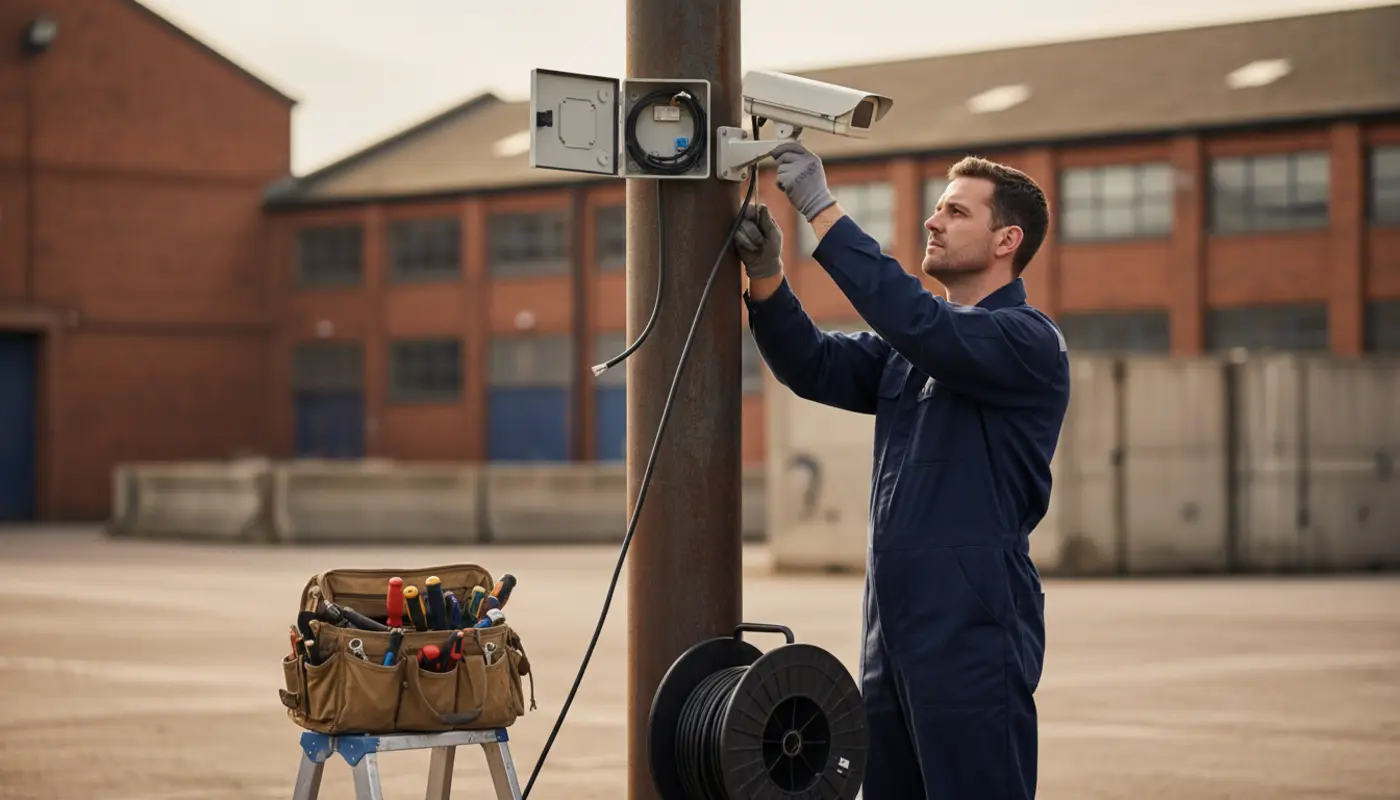
In simple terms, your boundary must be secure and suitable for the type of waste activity you carry out. Gaps in fencing, damaged gates or easy climb points can quickly lead to enforcement action. The Environment Agency can issue improvement notices and, in serious cases, suspend operations if security failures contribute to breaches.
A shutdown does more than pause work. It affects contracts, reputation and staff confidence. That is why perimeter security should sit within your compliance planning, not just your security budget. When fences, gates and detection systems are backed by clear procedures and maintenance records, regulators can see that you are taking a proactive approach.
Fire Prevention Plans And Perimeter Layout
If you store combustible waste, you will need a Fire Prevention Plan. Environment Agency guidance requires operators to reduce fire risk, limit the size and duration of any fire and minimise environmental impact. Separation distances of at least 6 metres between piles and from boundaries are common requirements, along with limits on pile size and storage time.
Your perimeter layout plays a direct role in this. Fences must not block fire service access and stockpiles should never be positioned tightly against boundary lines. Fire alarm systems must comply with BS 5839, typically Category L1 or L2 depending on the risk level, and installations should be Insurance Approved.
Routine testing is essential. If you are reviewing your procedures, you may find our advice on how often fire alarms should be tested useful. A serious fire does not only mean cleanup costs. It can bring investigations, disruption and long term reputational damage.
Fly Tipping And Illegal Waste Dumping Prevention
Fly tipping is not limited to rural lanes. Industrial estates across the North West experience repeated incidents, particularly where boundaries are weak or entrances are rarely used. It becomes frustrating when the same areas are targeted again and again.
Continuous perimeter fencing, controlled vehicle gates and concrete barriers at vulnerable points are proven deterrents. Clear signage stating that CCTV is in operation and that prosecutions will follow can reduce opportunistic dumping. Surveillance must comply with UK GDPR and the ICO surveillance camera code. This means having a lawful basis, clear privacy notices and secure storage of recorded footage.
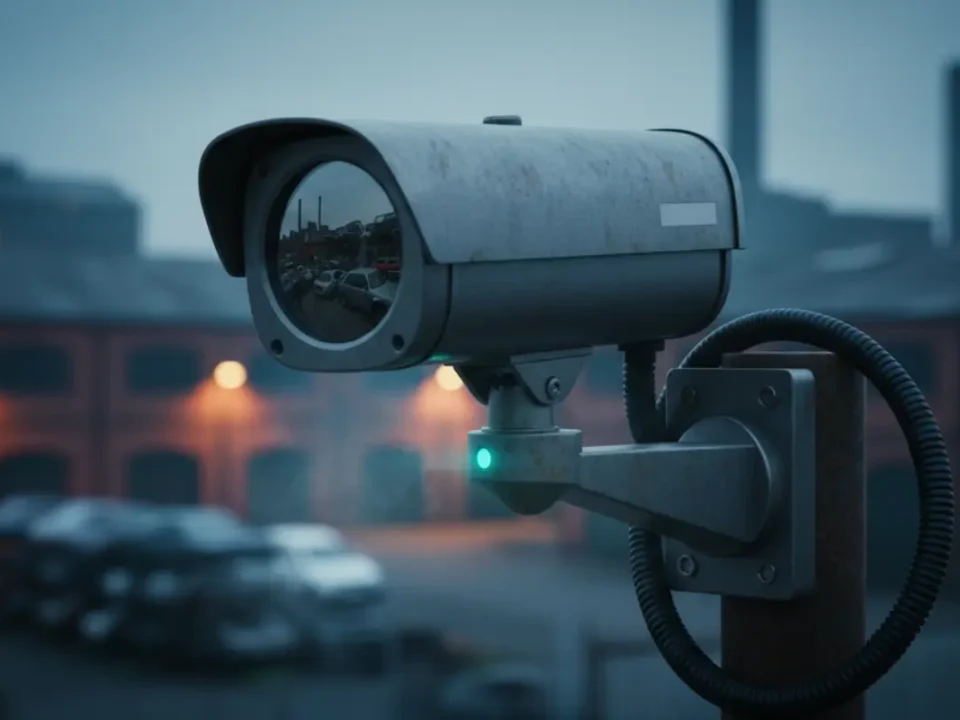
Most organisations using CCTV must pay a data protection fee and register with the ICO. Careful positioning is essential so cameras cover your land without unnecessarily capturing neighbouring property or public highways. For more detail on camera positioning, see where you can point CCTV cameras. Are you confident your current system would meet regulatory scrutiny?
Metal Theft And Scrap Yard Security
Scrap yards and recycling facilities that handle metal face additional risks. Under the Scrap Metal Dealers Act 2013, dealers must hold a licence and follow strict record keeping rules. Local authorities, police and the Environment Agency work together to enforce these conditions.
From a perimeter point of view, anti climb fencing, secure storage areas for high value metals and strong lighting are essential. Intruder alarm systems protecting buildings or cabins should comply with EN 50131, usually Grade 2 or Grade 3 depending on risk. For eligibility for a Police Response URN, the system must be installed by an SSAIB certified and Insurance Approved provider.
Although the standards can sound technical, clear guidance makes them easier to understand. Experience from similar high risk sectors, such as detailed in perimeter security for car salvage yards, shows that layered protection is most effective. Fencing creates the boundary, while detection and response complete the protection.
Perimeter Intrusion Detection For Large Open Air Yards
Waste and recycling facilities often span several acres with irregular layouts and multiple access points. Standard motion detectors alone are rarely enough for this type of environment.
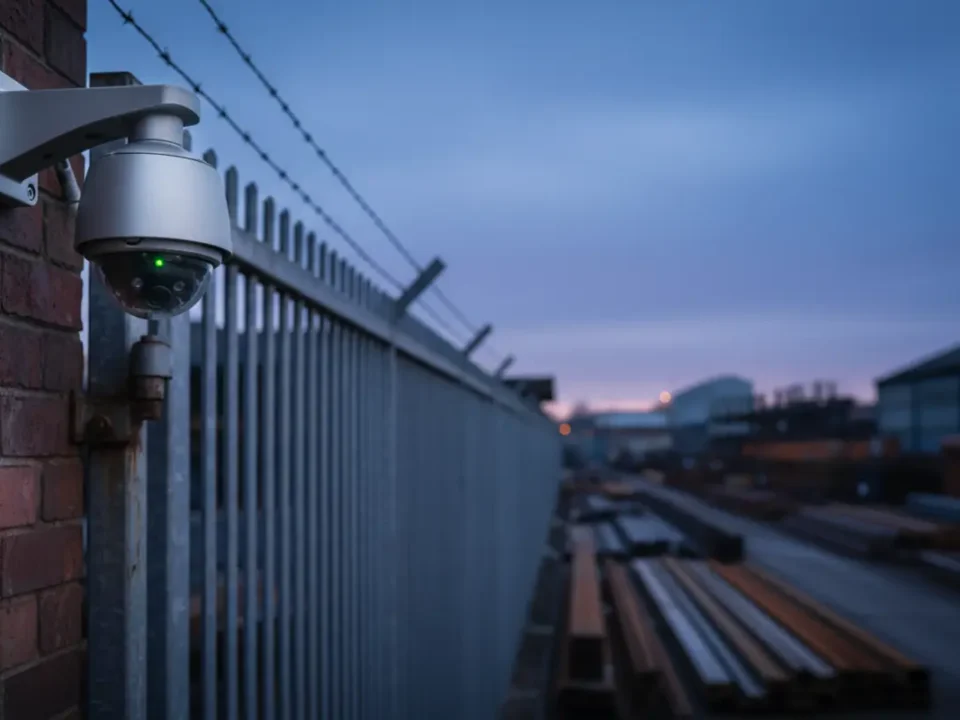
Modern perimeter detection can include fence mounted vibration sensors, ground radar, beam systems and intelligent video analytics. These systems create an early warning zone before an intruder reaches key assets. Alerts can automatically direct PTZ cameras to the activation point, allowing visual verification and reducing false alarms.
Where police response and insurance recognition are required, systems must meet EN 50131 standards and be installed by an SSAIB certified and Insurance Approved company. That link between compliance and response is critical, particularly for sites that experience repeat incidents.
What A Compliant Waste Site Perimeter Should Include
- Secure and well maintained boundary fencing
- Controlled vehicle and pedestrian access points
- EN 50131 compliant intruder protection
- SSAIB certified and Insurance Approved installation
- GDPR compliant CCTV with clear signage
- Alignment with your Fire Prevention Plan
- Documented maintenance and testing records
When these elements work together, the site becomes easier to manage and far less vulnerable to disruption.
Out Of Hours Monitoring And Remote Video Response
Many waste management sites operate with minimal staff overnight and at weekends. Unfortunately, these quieter periods are often when incidents occur.
Remote monitoring through an alarm receiving centre allows activations to be verified in real time. Trained operators can issue live audio warnings, contact keyholders or escalate to police where a Police Response URN is in place. This approach reduces unnecessary call outs while ensuring genuine threats receive the right level of response.
Ongoing maintenance is equally important. Regular inspections under a documented contract demonstrate due diligence to insurers and regulators. A structured plan such as our security maintenance contracts in Manchester helps keep systems reliable throughout the year.
Working With Police And Business Crime Partnerships
Greater Manchester Police, Merseyside Police and Lancashire Constabulary all support Business Crime Reduction Partnerships. These schemes allow local organisations to share information about offenders and suspicious activity.
For waste operators, joining local partnerships strengthens your overall security position. When perimeter systems are compliant, SSAIB certified and Insurance Approved, and supported by a valid Police Response URN, collaboration with police becomes far more effective. It demonstrates a serious commitment to prevention rather than reacting after incidents occur.
Case Examples And Lessons Learned
In one anonymised North West case, a recycling yard experienced repeated night time intrusions through a poorly lit rear boundary. Minor fence damage had not been prioritised. After a serious fire incident linked to suspected arson, the operator faced Environment Agency scrutiny.
The solution included upgraded fencing, radar based perimeter detection, EN 50131 Grade 3 intruder protection for buildings and monitored CCTV supported by GDPR compliant policies. Stockpiles were repositioned to meet Fire Prevention Plan separation distances, improving compliance and fire service access. Incidents reduced significantly within months.
Another site struggled with fly tipping along an unused side entrance. Installing concrete barriers, clearer signage and monitored cameras reduced illegal dumping and strengthened their compliance record during permit review.
Protecting Waste Management Sites Across The North West
Perimeter security for waste management sites in the North West involves much more than fencing. Environmental permits, Fire Prevention Plans, UK GDPR, metal theft legislation and police partnership all play a part.
When these elements are treated as a joined up strategy rather than separate tasks, sites become safer, more compliant and easier to insure. iSecurity Solutions is a trusted UK provider of commercial and domestic security systems, helping homes and businesses stay protected around the clock. From CCTV and intruder alarms to fire safety, access control and construction site monitoring, our expert team designs reliable and tailored solutions backed by responsive service and modern remotely monitored technology. Whether securing a single waste facility or managing multiple sites, we deliver the equipment, expertise and peace of mind needed to protect what matters most.