
Emergency Lighting for Offices in Manchester
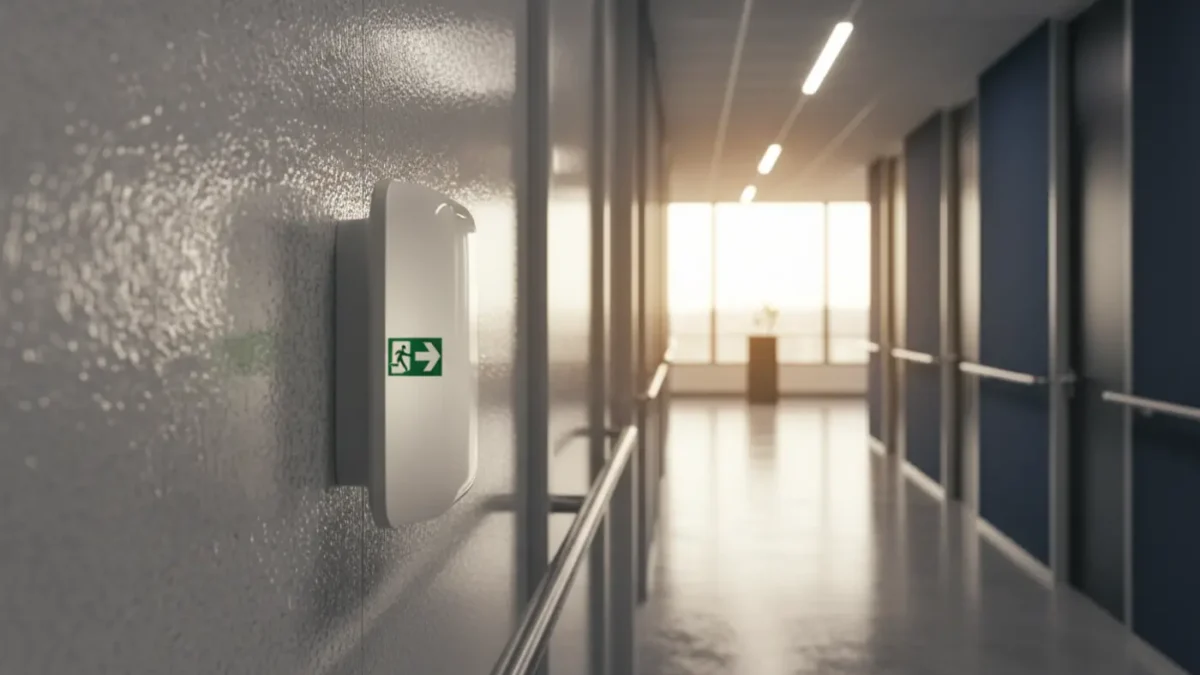
Emergency Lighting For Offices In Manchester
Office emergency lighting Manchester BS 5266 legal requirements are not optional. They are law. Yet every year, office managers treat emergency lighting like a decorative extra. It is not mood lighting. It is there for when everything goes wrong.
Manchester has glass towers, old mills and multi storey office blocks. Compliance is not just paperwork. It is about getting people out safely when the lights fail. That means understanding BS 5266, BS EN 1838 and your duties under the Regulatory Reform Fire Safety Order 2005.
At iSecurity Solutions fire safety services, we design and install compliant emergency lighting systems across Greater Manchester. Properly specified. Properly tested. Fully certificated. No shortcuts. iSecurity Solutions is a trusted UK provider of commercial and domestic security systems, helping homes and businesses stay protected around the clock.
UK Legal Requirements And Employer Duties In Manchester
Let us be clear. If you are the responsible person for an office, the duty sits with you. Not your electrician. Not your fit out contractor. You.
Under the Regulatory Reform Fire Safety Order 2005, you must ensure safe evacuation. That includes adequate emergency escape lighting designed and maintained to BS 5266 1 and aligned with BS EN 1838 lux levels. If your building also has fire alarm installation in Manchester to BS 5839, both systems must work together. One without the other is pointless.
Description of Image: Ceiling mounted emergency lighting units illuminating an office corridor and marked fire exit route in a Manchester commercial building.
BS 5266 And The Legal Framework Explained
BS 5266 1 sets out how emergency lighting should be designed, installed and maintained. It covers positioning, duration, testing and documentation. BSI guidance on BS 5266 1 updates explains how the 2025 revisions tighten expectations around escape routes and standby lighting.
Here is what is actually happening. Inspections are stricter. Documentation matters more. If you cannot prove compliance, you will struggle during audits or enforcement visits.
Manchester City Council Building Control can request drawings and commissioning certificates during refurbishments or change of use. Pairing upgrades with a compliant emergency lighting installation service is not optional. It is expected.
Lux Levels And Escape Route Illumination Standards
Let us talk about what actually matters. Lux levels.
- Escape routes 1 lux minimum
- Open areas 0.5 lux minimum
- High risk tasks 15 lux
- Response within 5 seconds
- Duration 1 to 3 hours
- Uniform light spread
- Clearly marked exits
Escape routes need at least 1 lux along the centre line. Not close enough. At least 1. Open plan areas over 60 square metres need 0.5 lux across the core area. High risk task areas such as plant rooms can require up to 15 lux.
When we carry out fire risk assessments in Manchester in line with PAS 79, we measure properly. We assess stair cores, corridors and open spaces. We do not guess.
Types Of Emergency Lighting Systems For Offices
Not all systems are equal. And no, the cheapest catalogue fitting is not automatically compliant.
- Maintained fittings that stay on permanently
- Non maintained fittings that activate on power failure
- Central battery systems for larger buildings
Open plan offices often use non maintained LED bulkheads and exit signs. Multi storey Manchester offices may benefit from central battery systems for easier maintenance and testing.
If your site also has access control or an intruder alarm system, coordination matters. Intruder alarms should comply with EN 50131 and the correct grade. After activation, safe reset access depends on clear escape lighting. Stop treating systems like they exist in isolation.
Open Plan Vs Multi Storey Office Considerations
Manchester loves open plan offices. Exposed brick. Glass walls. Looks great online.
But furniture moves. Partitions change. Shadow areas appear. Your emergency lighting design must allow for layout changes. Otherwise you end up with dark spots where people actually walk.
Multi storey buildings bring staircases, basements and roof terraces. Stair cores must be lit consistently from top to bottom. Basement car parks need clear escape route lighting. Roof spaces used by staff need safe egress. Obviously.
Here is what is actually happening. Fit out teams install lighting. Desks move six months later. Nobody updates the emergency lighting plan. Stop pretending that is acceptable. It is not.
Routine Testing And Maintenance Schedules
Installing emergency lighting is step one. Testing it is ongoing.
BS 5266 requires:
- Monthly functional tests
- Annual full duration test
- Log book records
- Fault rectification without delay
Monthly tests confirm fittings illuminate when mains power fails. The annual test runs the system for its full rated duration, often three hours.
When did you last check your log book? If you cannot produce records during inspection, you are exposed. Straight up.
Many Manchester offices now choose automatic self testing systems. They cost more at first. They save time and admin long term. We explain practical compliance steps in our recent blog on fire safety compliance essentials.
Competent Person Requirements And Certification
Emergency lighting design is not basic wiring. BS 5266 requires systems to be designed and installed by a competent person.
In practice, that means contractors registered with recognised schemes. At iSecurity Solutions, installations are fully certificated to BS 5266 and Insurance Approved. Where required, systems sit within an SSAIB certified and Insurance Approved fire and security framework, supporting Police Response URN eligibility when paired with compliant alarm systems.
We also coordinate with extinguishers maintained to BS 5306 and BAFE SP101 and fire alarms to BS 5839. That joined up approach keeps insurers and inspectors satisfied.
Manchester City Council And Local Authority Oversight
Greater Manchester Fire and Rescue Service can inspect premises under the Fire Safety Order. They review escape routes, signage, lighting and maintenance records.
Emergency lighting is part of a wider strategy. Detection, alarms, signage, extinguishers and risk assessments must align. We cover system integration in our guide to building a complete office fire strategy.
Costs And Practical Budgeting
Let us talk money. Small offices may spend a few hundred pounds upgrading fittings. Larger multi storey sites can run into several thousand.
Costs depend on:
- Building size
- Number of fittings
- System type
- Testing complexity
- Access requirements
LED systems reduce energy use and maintenance frequency. Central battery systems can reduce disruption in larger buildings. Bluntly, the cheapest upfront option is rarely the cheapest over ten years.
Cut the nonsense. Budget properly. Test regularly. Document everything.