How Can Sports Stadiums Prepare for Martyn’s Law
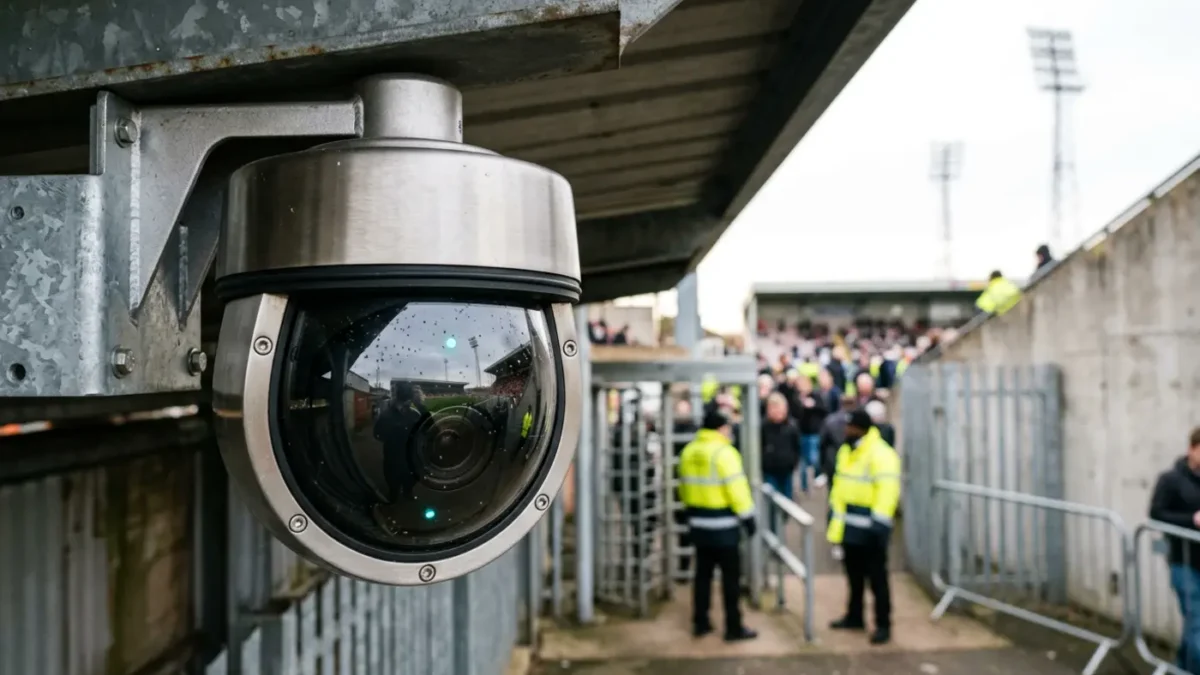
Martyn's Law For Sports Stadiums
Sports stadiums can prepare for Martyn's Law by checking whether they fall into the enhanced tier, naming a senior person to lead compliance, completing a terrorism risk assessment, writing public protection procedures, training staff and testing plans before the law is expected to start in spring 2027.
In 2026, the main message is simple: do not wait until the last whistle. Stadium operators, clubs, ground safety officers and event teams now have time to review security calmly and sensibly, without making every entrance feel like an airport terminal.
iSecurity Solutions is a trusted UK provider of commercial and domestic security systems, helping homes, businesses and public facing sites stay protected around the clock. From CCTV and intruder alarms to fire safety, access control and construction site monitoring, the team designs reliable, tailored systems backed by responsive service and modern remotely monitored technology.
What Martyn's Law Means For Sports Stadiums
Martyn's Law is the common name for the Terrorism (Protection of Premises) Act 2025, which received Royal Assent on 3 April 2025. Its purpose is to improve public safety by making certain venues and events plan ahead, reduce weak points and prepare staff to respond if a terrorist incident happens.
The law is not about creating fear, and it does not ask every venue to install the same equipment. It is about taking reasonably practicable steps, which means the measures should be suitable for the size, use, layout and risk level of the stadium. A small community stand and a large professional ground will not be treated in exactly the same way, which is the right approach.
The official Home Office statutory guidance explains the scope of the Act, the tier structure and the duties that will apply once commencement takes place. Commencement means the point when the duties start to apply in practice, so stadium teams should use the guidance alongside sector advice, local Safety Advisory Group input and their own operational experience.
Enhanced Tier Status For Stadiums With 800 Or More People
Most professional sports stadiums and many larger community grounds will need to look closely at the enhanced tier. The enhanced tier applies where 800 or more individuals may reasonably be expected to be present at the premises at one time, and that number includes staff, stewards, contractors, volunteers, media teams and spectators.
This point matters because the test is not just the published spectator capacity on a website. Stadium teams should map peak occupancy across match days, concerts, finals, community events, hospitality functions, fan zones and temporary layouts, because if 800 or more people may reasonably be present at one time, the enhanced duty is likely to be relevant.
The stadium footprint also matters. Operators should consider the bowl, stands, concourses, turnstiles, hospitality lounges, ticket offices, retail areas, fan zones, car parks, coach parks, external queues, drop off areas and transport links. In real life, risk does not stop neatly at the turnstile, even if that would make planning much easier.
Stadium teams reviewing wider venue readiness may also find useful context in our Martyn's Law timeline guide, especially when building internal compliance calendars for 2026 and 2027.
The Martyn's Law Timeline Stadium Operators Should Track
The timeline matters because Royal Assent did not make all operational duties immediately enforceable. The Act became law on 3 April 2025, the Home Office statutory guidance was published on 15 April 2026, and commencement is currently expected in spring 2027, although the exact date must still be confirmed through official channels.
Once the law commences, existing responsible persons are expected to have an initial period to notify the Security Industry Authority, known as the SIA. Current guidance points to a three month notification period after commencement, with later changes in responsibility generally needing to be reported within 28 days once that initial period has passed.
A sensible approach is to create a 2026 preparation plan now. That plan should include classification, governance, risk assessment, documentation, staff training, technology review, exercises and recordkeeping, with space to adjust once the final live SIA notification process is confirmed.
A Practical Stadium Preparation Checklist
A clear checklist helps stadium teams turn the guidance into practical action without making everyone reach for another coffee.
- Confirm whether the enhanced tier is likely to apply.
- Name the senior person responsible for compliance.
- Appoint match day deputies and make sure they know their authority.
- Map peak occupancy across all event types and layouts.
- Complete a stadium wide terrorism risk assessment.
- Write or update public protection procedures.
- Review CCTV, access control, search areas and perimeter measures.
- Train staff, stewards, volunteers and contractors by role.
- Run exercises with internal teams and external partners.
- Keep clear records for SIA notification, inspections and internal assurance.
Appoint A Senior Individual And Match Day Deputies
Every stadium should identify who owns Martyn's Law compliance at senior level. That could be a board member, chief operating officer, stadium director, safety officer or another senior manager with the authority to make decisions, allocate budget and require action across departments.
The phrase responsible person has a legal meaning under the Act, so stadiums with complex arrangements should be careful. Ownership, tenancy, event promotion, catering, stewarding and security provision may be split between different organisations, but statutory responsibility cannot simply be pushed onto a contractor and forgotten.
It is also wise to appoint named deputies for match days, evening fixtures, concerts and temporary events. Stadium teams should know who can make urgent decisions if the senior lead is not on site, and those deputies should understand when to escalate, who can authorise evacuation, invacuation or lockdown, and how the control room, safety team, communications team and security supervisors work together under pressure.
Register And Notify The SIA
The SIA will be the UK regulator for Martyn's Law. Enhanced tier premises will need to notify the SIA of the responsible person and provide the required information about the premises, contact details and compliance arrangements once the notification process opens.
To avoid a last minute rush, gather the basics early. This includes the stadium name, address, operating entity, responsible person details, deputies, principal uses, event types, capacity information, site plans where appropriate and a clear change control process for updates.
Keep proof of submissions, confirmations and correspondence. SIA related records should sit alongside the venue's wider compliance evidence, rather than staying in one person's inbox under a subject line like important security thing, which is not exactly audit friendly.
Complete A Stadium Wide Terrorism Risk Assessment
A terrorism risk assessment should look across the whole stadium environment, not just the pitch side areas or main entrances. It should identify likely weak points, existing controls, remaining risks and actions needed to reduce the risk of physical harm so far as reasonably practicable. Remaining risks are the risks left after current controls have been considered.
Useful areas to assess include turnstiles, gates, concourses, stands, hospitality spaces, catering zones, ticket offices, retail units, media areas, plant rooms, delivery routes, contractor access points, fan zones, queues, car parks and coach parks. Temporary structures should be included too, because a pop up fan village can change the risk picture quickly.
The assessment should consider broad threat scenarios such as suspicious items, unauthorised access, vehicle related threats, crowd movement issues, communication failure, contractor related risks and incidents affecting external queues. Sensitive tactical details should not be published in public documents, but decision makers must understand the risks well enough to act.
For physical measures, the assessment should record what already exists, how effective it is, what needs improvement and why the chosen response is proportionate. Good documentation is not paperwork for the sake of paperwork. It is how a stadium proves it has thought carefully and acted responsibly.
Create Public Protection Procedures And A Terrorism Protection Plan
Enhanced tier stadiums will need documented public protection procedures and measures. Many venues may call this a Terrorism Protection Plan, but the important part is not the title on the front page. It is whether the document clearly explains what people should do before, during and after an incident.
The plan should cover evacuation, where people are moved away from danger and out of the venue when it is safe to do so. It should also cover invacuation, which means moving people into safer internal areas because the threat is outside, along with lockdown procedures for controlling access and movement during a serious incident.
Communication deserves proper attention. Public address systems, digital signage, staff radios, control room processes, accessible messaging, social media handling and pre approved statements should all be considered. Clear messages save time, reduce confusion and help stop rumours travelling faster than the stewards can.
The plan should connect with the ground safety certificate, operations manual, emergency plan, event safety management plan, business continuity plan and crisis communications process. Martyn's Law preparation should strengthen existing stadium safety arrangements, not sit in a lonely folder nobody opens.
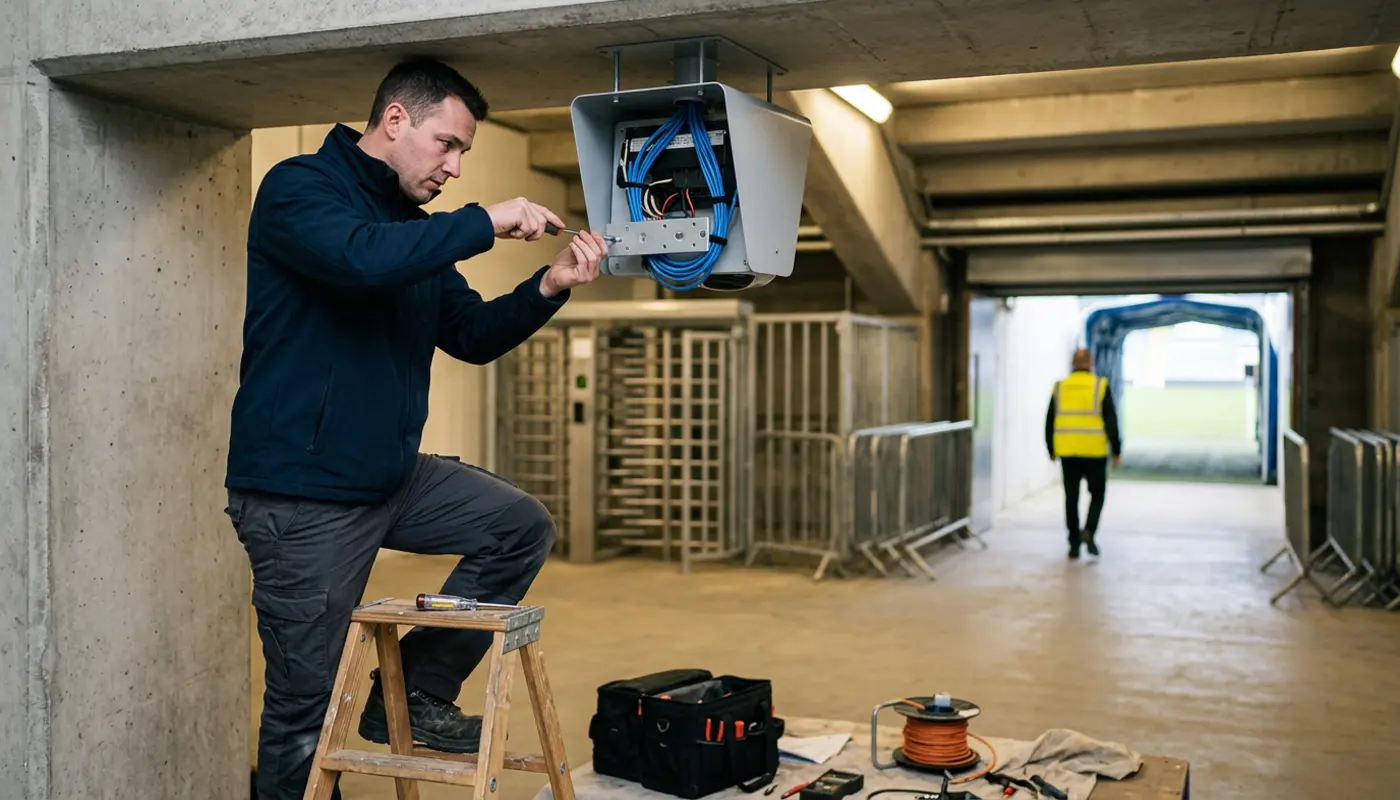
Review CCTV, Access Control And Perimeter Measures
Technology should support the risk assessment, not lead it. CCTV, access control, screening points, bag search areas, perimeter controls and hostile vehicle mitigation should all be reviewed against real stadium operations, including peak arrival times and post match crowd movement. Hostile vehicle mitigation means measures that help reduce the risk of a vehicle being used to harm people or damage a venue.
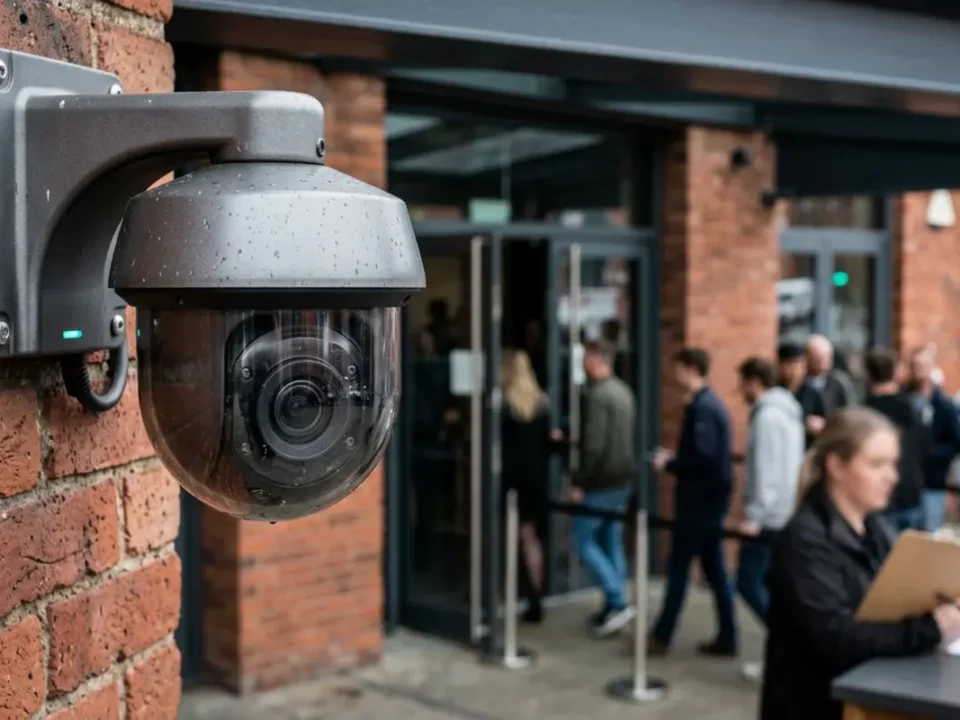
For stadium CCTV, think about key approaches, entrances, queues, concourses, vehicle access points and control room visibility. Where monitored CCTV, intruder alarms or perimeter detection are linked to police response, SSAIB Insurance Approved certification is the prerequisite for a Police Response URN, and intruder alarm or detection elements should align with BS EN 50131 at the appropriate Grade 2 or Grade 3 level based on risk.
Access control should cover turnstiles, staff doors, hospitality areas, control rooms, plant spaces, media zones and contractor routes. Lost passes, temporary accreditation and out of hours access need clear rules, because the weakest access control point is often the one everyone thinks someone else is managing.
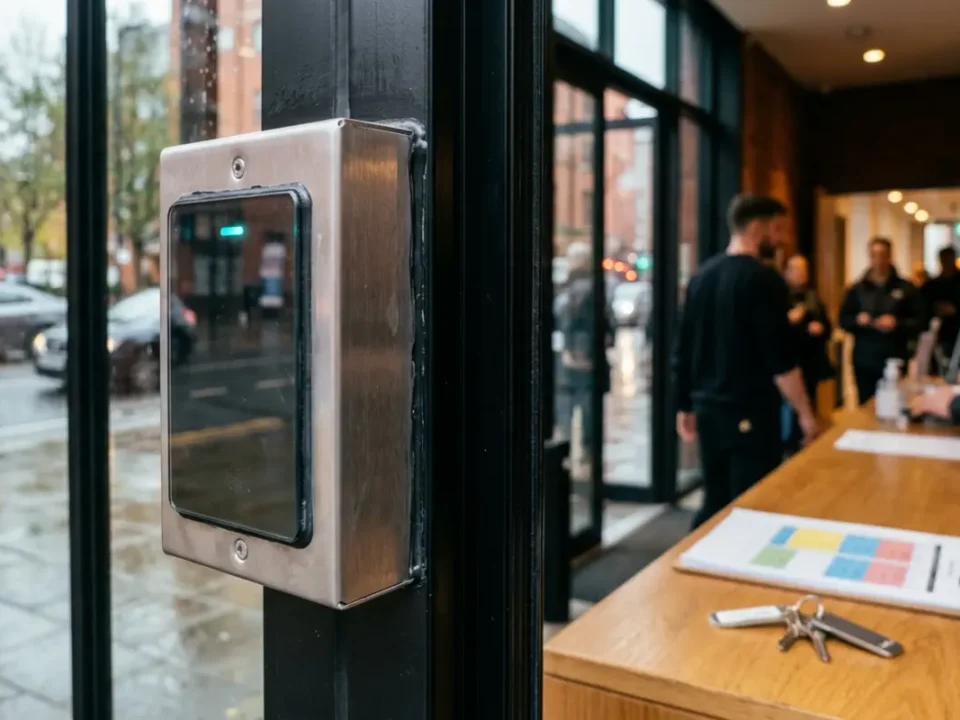
Stadiums reviewing entrances, staff areas and restricted zones can explore practical options through access control systems that support safer movement without making day to day operations difficult.
Screening and search procedures should be fair, consistent and workable. Bag searches, prohibited item processes, queue management, accessible lanes and staff briefings need to be planned together, because better security should not create unmanaged crowds outside the ground.
Train Stewards, Security Teams And Volunteers
Training is one of the most practical ways to prepare for Martyn's Law. Permanent staff, casual stewards, volunteers, hospitality teams, cleaners, contractors and senior managers do not all need identical training, but they should understand the basics of suspicious activity, reporting routes and emergency actions.
ACT Awareness e learning from ProtectUK is a useful starting point for many venue staff. Stadium operators should then add role specific training for stewards, security officers, control room operators, search teams, supervisors and senior decision makers.
Match day briefings should cover current arrangements, entrance changes, fan zone layouts, radio channels, reporting routes, emergency procedures and any event specific risks. Attendance should be recorded, because if something is important enough to say, it is important enough to evidence.
Rehearse Plans With Partners
Plans need testing before they are needed for real. Table top exercises are a good first step because they let senior managers, safety officers, security leads, communications teams and control room staff walk through decisions without disrupting a live event.
Practical drills should test evacuation, invacuation, lockdown, radio communications, public address messages, backup systems and welfare arrangements. Accessibility must be included, as disabled spectators, children, older visitors and people unfamiliar with the venue may need additional support.
Stadiums should also work with police, emergency services, the local authority, Safety Advisory Groups, transport partners and event promoters. Multi agency exercises help find gaps between organisations, which is far better than discovering them during a major incident.
Keep Records And Review Every Year
Good records will be essential for SIA inspections and internal assurance. Keep the premises classification assessment, responsible person details, risk assessments, plan versions, notification records, training logs, match day briefings, exercise reports, incident logs, maintenance records and corrective action trackers.
Review arrangements at least annually, and sooner after a significant incident, near miss, major refurbishment, layout change, new fan zone, change in operator, new event type or updated official guidance. A stadium is a living place, not a museum exhibit, so the paperwork should move with it.
Final Thoughts
Preparing for Martyn's Law is not about panic buying equipment or burying teams in paperwork. It is about understanding the enhanced tier, assigning clear accountability, assessing the whole venue footprint, training people properly and keeping evidence that decisions were sensible and proportionate.
Sports stadiums that start in 2026 will have time to improve calmly before expected commencement in spring 2027. That makes life easier for boards, safety officers, stewards, spectators and everyone who would prefer the biggest drama of the day to stay on the pitch.