Complete Network Infrastructure for Schools in Manchester
Complete Network Infrastructure For Schools In Manchester
A complete network infrastructure for schools in Manchester in 2026 means building the system properly from the ground up so it supports learning, safeguarding and compliance without constant fixes. In practical terms, this includes Cat6a structured cabling as standard, OM4 fibre between buildings, PoE+ switching, Wi Fi 6 access points, secure VLAN segmentation, compliant content filtering and reliable Janet connectivity. Everything should align with DfE guidance and relevant British Standards so decisions made today still make sense years from now.
For headteachers, school business managers and trust IT leads, the challenge is not only speed. You must consider safeguarding duties, Ofsted expectations, funding pressures and the risk of outages during exams. Whether you are upgrading ageing cabling or planning a new build, your approach to school network infrastructure in Manchester should reflect national standards and the way your school operates day to day. You can also review how structured classroom points are typically deployed in Ethernet cabling projects in Manchester, as many of the same best practices apply in education settings.
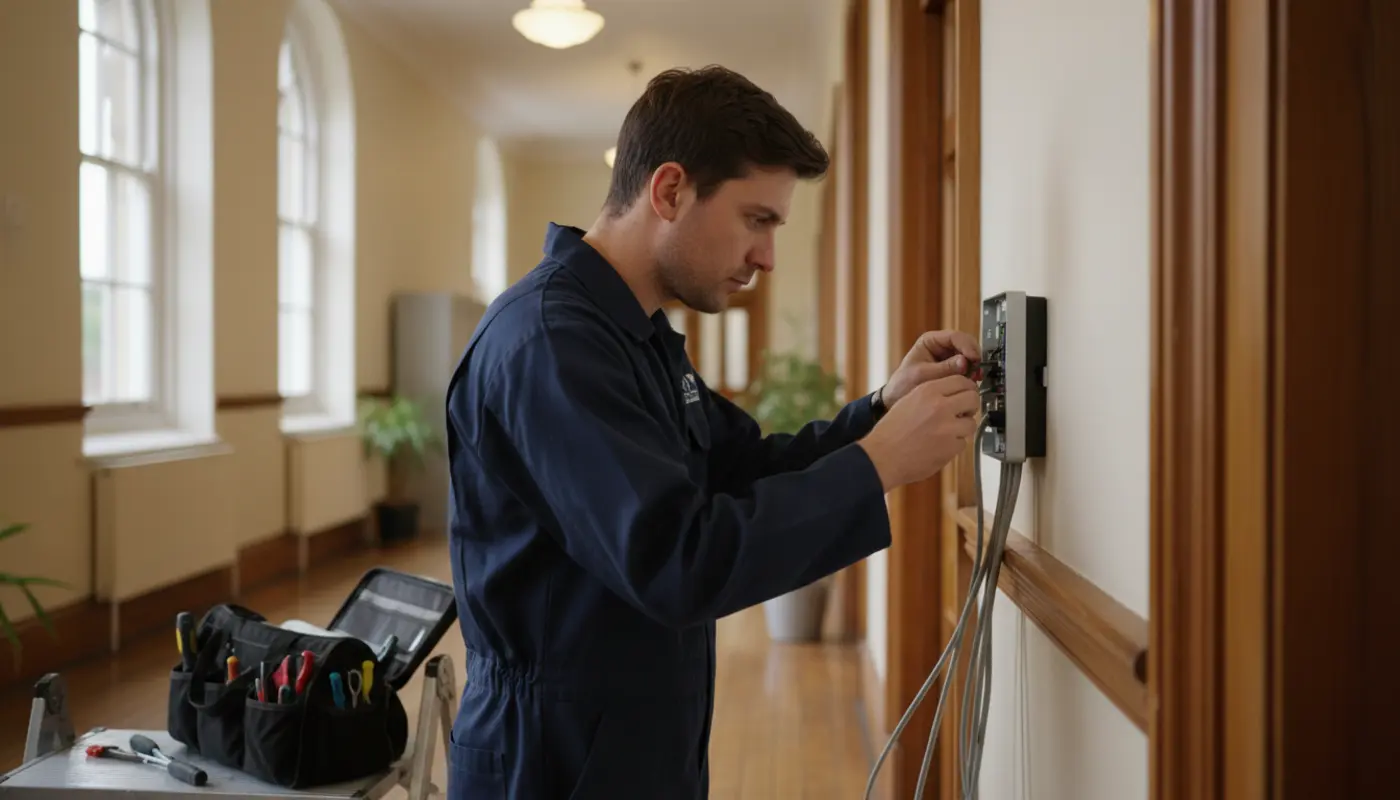
At iSecurity Solutions, we support Manchester schools with complete network design and installation that is DfE aligned, Fluke certified and ready for Wi Fi 6, CCTV, access control and cloud based learning platforms. The goal is straightforward. Install it correctly once, and it should serve your school reliably for the next decade and beyond.
Cat6a Structured Cabling For Schools In Manchester
Cat6a structured cabling is the recommended standard for new and replacement school installations across England. According to official DfE network cabling standards, Category 6A supports 10 Gigabit Ethernet and provides the extra performance needed for Wi Fi 6 access points and higher power PoE devices. For Manchester schools planning long term investment, this headroom is essential.
Each classroom, office and specialist space should have properly tested Cat6a runs with a maximum 90 metre permanent link, no mid run joints and all components rated to the same category. Installations must comply with BS 6701, BS 50173 and BS 50174. Electrical containment, segregation from mains supplies and earthing should align with BS 7671 wiring regulations so the system remains safe and dependable over time.
All cabling should be tested using Fluke certified equipment, with as built drawings and full performance results provided at handover. Clear documentation supports funding bids and future expansion while giving reassurance that the hidden infrastructure behind walls and ceilings meets specification.
Fibre Backbone Connectivity Between School Buildings
Many Manchester schools operate across several blocks, often mixing older Victorian buildings with modern extensions. Copper cabling alone cannot provide the resilience and bandwidth required. An OM4 fibre backbone between buildings ensures stable, high capacity connectivity for central servers, internet access and safeguarding systems.
DfE guidance recommends OM4 optical fibre for inter building links, commonly installed as 12 or 16 core to allow for resilience and future growth. Larger campuses may benefit from a ring topology so traffic can reroute automatically if a link fails. Smaller sites may use a star layout, provided ducts and containment allow for future upgrades.
Fibre routes should be carefully planned and protected within suitable ducting, ideally underground where practical. Designing for potential damage, such as accidental cable strikes, helps prevent a single incident from taking down the entire network during a critical period like exams.
Switching And PoE Plus For Modern School Environments
High quality cabling and fibre only perform well when supported by a well designed switching layer. Most schools operate a core switch in the main communications room, distribution switches in each block and PoE+ access switches in cabinets serving classrooms and offices.
PoE+ enables network cables to deliver both data and power, allowing Wi Fi 6 access points, IP phones, door access readers and selected CCTV cameras to run directly from the switch. Each 48 port PoE+ switch has a defined power budget, so careful calculation ensures there is enough capacity for all connected devices without overloading the system.
If surveillance systems are part of your safeguarding strategy, IP cameras and associated detection systems should follow EN 50131 grading principles where integrated with intruder alarms. Any monitored CCTV or intruder alarm linked to police response must be installed by an SSAIB certified and Insurance Approved provider. SSAIB certification is required for eligibility for a Police Response URN.
For further insight into camera placement and safeguarding led layouts, see CCTV for Primary Schools in Manchester, which explains practical design considerations.
Wi Fi 6 Access Points For High Density Classrooms
Modern classrooms often include thirty pupils using tablets or laptops, alongside a teacher device and interactive display. When everyone connects at the same time, weaker networks struggle. Wi Fi 6 is designed for high density environments and allows multiple devices to communicate more efficiently, reducing delays and improving overall performance.
Correct access point placement is essential. Thick brick walls, steel structures and temporary classrooms can affect signal strength. Professional wireless surveys help determine suitable access point density, channel planning and power levels. Exam halls and assembly spaces may require additional coverage during peak periods to prevent disruption.
Each access point should connect via Cat6a and be powered using PoE+. When cabling, switching and wireless systems are planned together rather than as separate projects, schools achieve a stable and consistent learning environment.
VLAN Segmentation For Staff Students And Guests
Not every user should access the same resources. VLAN segmentation creates logical separation within a single physical network, improving both security and performance. A common model includes separate VLANs for staff, students, guests and infrastructure devices.
Staff networks can access MIS systems, safeguarding records and shared printers. Student networks are filtered and restricted from sensitive internal systems. Guest networks typically provide internet only access, fully isolated from core services. Infrastructure VLANs host CCTV, access control and building management systems under tightly controlled rules.
Modern networks often use 802.1X authentication with RADIUS servers to assign users automatically to the correct VLAN based on login credentials. This reduces configuration errors and supports data protection and safeguarding obligations.
Content Filtering Aligned With KCSIE Requirements
Keeping Children Safe in Education requires governing bodies to ensure appropriate filtering and monitoring systems are in place and reviewed regularly. Clear responsibility for oversight must also be assigned within the school or trust.
Filtering can be delivered through a firewall, cloud based web filtering platform, DNS filtering or a combination of methods. SafeSearch enforcement, logging and alerting should be configured correctly so harmful content is blocked while legitimate educational resources remain accessible.
Effective filtering should integrate with VLAN design and safeguarding policies rather than operate as a standalone tool. Some schools also combine digital safeguarding measures with physical protections such as access control for primary schools in Manchester to create a joined up approach to site safety.
Janet And Jisc Connectivity For Manchester Schools
Most schools in England access high performance broadband through the Janet network, operated by Jisc and supported by DfE funding. Janet offers secure and resilient connectivity tailored to the education sector, often delivered through regional broadband consortia or local authorities.
Your internal LAN must be capable of distributing the bandwidth Janet provides. Investing in gigabit internet offers little benefit if switches and cabling cannot handle that capacity efficiently. Designing LAN and WAN together ensures schools gain full value from their connectivity investment.
Funding Routes And Phased Installation
Network infrastructure upgrades can often be included within larger capital works. Under the Condition Improvement Fund, ICT infrastructure such as cabling and wireless may be eligible where it forms part of a wider building condition project. Linking network improvements to roof works, refurbishments or extensions can reduce pressure on standalone IT budgets.
Successful upgrades are typically phased. An initial audit and discovery stage is followed by pilot installations in one block. Major fibre and core upgrades are best completed during summer holidays to minimise disruption. Clear communication with staff and careful planning around exam periods are essential to avoid unexpected downtime.
Where schools are also reviewing life safety systems, related compliance topics can be explored in fire alarm guidance for schools, which explains BS 5839 categories such as L1 and L2 in clear terms.
Building A Future Proof School Network In Manchester
A complete network infrastructure is about far more than faster internet speeds. It supports digital learning, protects sensitive data, enables CCTV and access control, and ensures compliance with DfE expectations and safeguarding duties.
Cat6a structured cabling, OM4 fibre backbones, correctly specified PoE+ switching, Wi Fi 6 access points, VLAN segmentation and robust filtering together create a reliable platform for teaching and administration. When installations are properly certified, designed to British Standards and delivered in planned phases, schools avoid the cycle of temporary fixes and repeated disruption.
Manchester schools face unique building layouts, funding pressures and safeguarding responsibilities. With careful design, clear documentation and experienced support, your network becomes a dependable foundation for learning rather than a constant concern.