Do Hmos Need Fire Extinguishers in Manchester

HMO Fire Extinguishers In Manchester
If you are an HMO landlord in Manchester, you are probably asking a simple question. Do you legally need fire extinguishers in your property, or are they optional? The honest answer is that it depends on your fire risk assessment and your licence conditions. In many Manchester HMOs, fire extinguishers are either required or strongly expected as part of overall fire safety compliance.
The legal side of fire safety can feel overwhelming at first. Once you understand what is actually required, it becomes much easier to manage. iSecurity Solutions is a trusted UK provider of commercial and domestic security and fire systems, helping landlords protect tenants with practical, SSAIB Insurance Approved solutions that stand up to inspection and deliver real peace of mind.
HMO Fire Extinguisher Manchester Landlord BS 5306
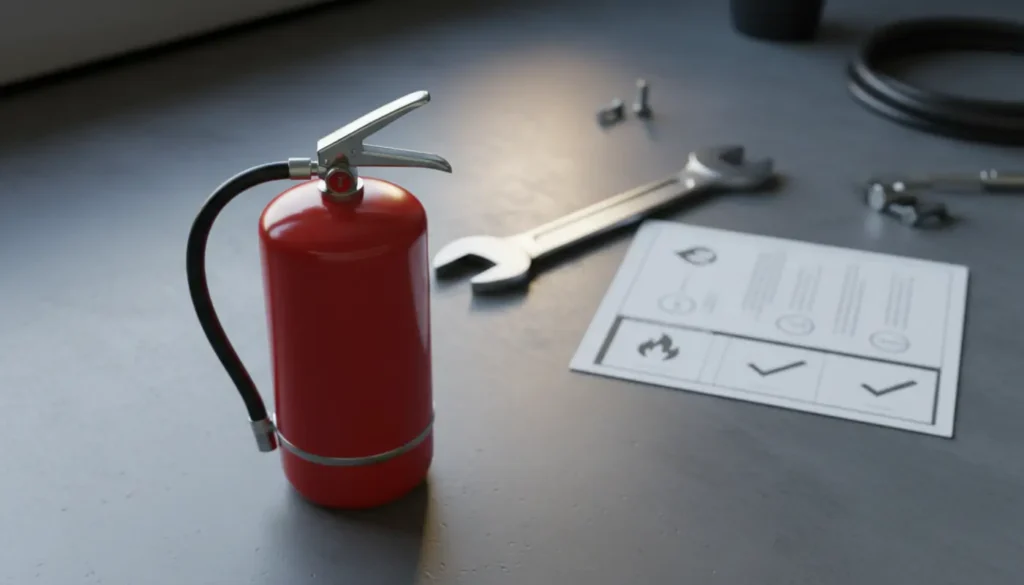
For a Manchester HMO landlord, the starting point is clear. You must carry out a suitable and sufficient fire risk assessment and provide appropriate firefighting equipment where the assessment says it is needed. If fire extinguishers are installed, they must be serviced every year in line with BS 5306 Part 3 and maintained properly.
Under the Regulatory Reform Fire Safety Order 2005, the responsible person, usually the landlord or managing agent, must ensure adequate fire precautions in the common parts of HMOs. The Housing Act 2004 and Manchester City Council HMO licensing conditions reinforce this by requiring clear evidence of proper fire safety management, including servicing records for firefighting equipment.
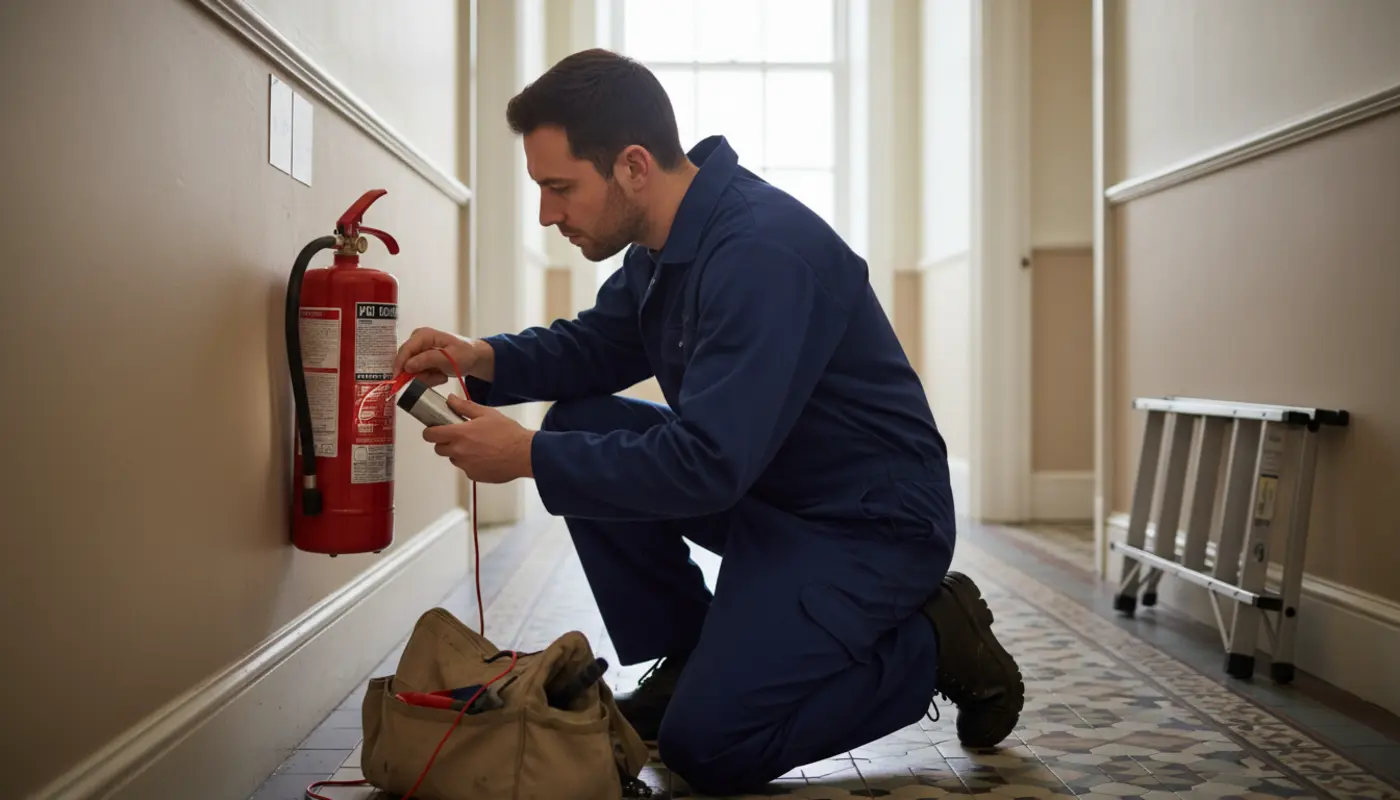
The Legal Basis For Fire Extinguishers In Manchester HMOs
The Fire Safety Order 2005 applies to the common parts of HMOs such as stairwells, corridors and shared kitchens. It requires appropriate firefighting equipment where necessary. It does not give a fixed rule like one extinguisher per floor. Instead, it relies on a fire risk assessment carried out by a competent person.
Manchester City Council HMO standards state that where extinguishers are provided, they must be checked regularly and serviced annually to BS 5306 Part 3. Licence conditions also require landlords to keep annual inspection and servicing certificates available for council inspection. If you cannot produce them, you may face issues at renewal. No landlord wants to be searching for paperwork while an inspector is waiting.
If you need structured support, including fire risk assessments and fire extinguisher servicing, working with one experienced provider can simplify compliance and keep your audit trail clear.
Are Fire Extinguishers Mandatory In Every HMO?
Not automatically. Manchester and many other councils follow a risk based approach. If your fire risk assessment identifies that portable firefighting equipment is necessary in the common parts, then it becomes a requirement for your property.
In smaller, lower risk HMOs with good compartmentation and clear escape routes, an assessor may decide that extinguishers are not essential. In larger or multi storey HMOs, or properties with shared kitchens used by several tenants, extinguishers are commonly recommended.
Many Manchester landlords choose to install them because it shows proactive management and may reduce liability if a small fire could have been tackled safely at an early stage. It is often about peace of mind as well as compliance.
Which Fire Extinguishers Are Usually Required In HMOs?
There is no single template, but council guidance provides a practical model. A typical setup in shared HMOs includes a 9 litre water or foam extinguisher on each floor in the common hallway, and a 2kg CO2 extinguisher in shared kitchens for electrical risks.
Water extinguishers are suitable for ordinary combustibles such as paper, wood and furniture. CO2 extinguishers are designed for electrical equipment and help reduce damage to appliances. In some properties, foam units are used as a multipurpose option covering Class A and certain Class B fires.
The final decision should always follow your fire risk assessment. If extinguishers are installed, they must comply with BS 5306 Part 3, be mounted correctly, clearly visible and not obstruct escape routes.
Correct Placement And Number Of Extinguishers
Placement should never be random. Extinguishers are usually located along escape routes, near exits and in shared kitchens where cooking risks are highest. They should be wall mounted at the correct height and positioned so tenants can access them without walking towards the source of a fire.
In multi storey HMOs, providing one suitable extinguisher per floor in the common parts is common practice. Your assessor may adjust this depending on layout and overall risk level. Larger properties with more tenants may require additional units to keep travel distances reasonable.
Tenants should also understand that extinguishers are for small, manageable fires only. They do not replace the need for safe evacuation.
Servicing Requirements Under BS 5306
If you provide extinguishers, annual servicing is mandatory. BS 5306 Part 3 sets out the inspection and maintenance requirements for portable fire extinguishers. Manchester licensing conditions require landlords to hold up to date annual service certificates.
Servicing should be carried out by a competent person, typically a BAFE SP101 registered provider, and the annual service certificate is usually insurance required. Without it, you may struggle to demonstrate compliance during a council inspection or following an insurance claim.
Between annual services, visual checks should be carried out regularly to confirm that extinguishers are in place, undamaged and showing correct pressure readings. Keeping a simple logbook shows active management and makes inspections easier.
The Role Of The Fire Risk Assessment
The fire risk assessment is central to your decision making. It identifies hazards, evaluates who is at risk and determines what fire precautions are necessary. That may include extinguishers, fire blankets in kitchens, upgraded alarms or improved signage.
A proper assessment will also review escape routes, fire doors and emergency lighting. Emergency lighting in HMOs must comply with BS 5266, with monthly function tests and annual full duration tests recorded. Fire alarm systems in larger HMOs may need to meet BS 5839, often Category L2 or L1 depending on layout and risk profile, and should be installed and maintained by an SSAIB Insurance Approved provider.
Combining extinguishers with compliant fire alarm systems and properly maintained emergency lighting creates a joined up safety strategy rather than a tick box approach. Would your current records stand up to a spot check tomorrow?
Record Keeping And Manchester Council Inspections
Manchester City Council can request evidence of compliance during licence applications, renewals or inspections. You should be able to provide clear and organised documentation without delay.
- Fire risk assessment
- Annual fire extinguisher service certificates
- Fire alarm servicing records
- Emergency lighting test logs
Good record keeping shows responsible management and protects you if there is ever an incident. A well organised compliance file makes inspections smoother and far less stressful.
Landlords who want a wider view of their obligations often read our overview of HMO fire safety responsibilities, which explains how documentation, servicing and physical measures link together.
Consequences Of Non Compliance
Failing to provide required firefighting equipment, or failing to service it properly, can have serious consequences. The council can refuse or revoke an HMO licence, issue improvement notices or impose financial penalties. In serious cases, breaches of the Fire Safety Order can lead to prosecution.
There is also reputational and civil liability risk. If a small kitchen fire spreads because there was no suitable equipment or it had not been maintained, you could face claims that might have been avoided. It is not only about compliance. It is about protecting people’s homes and your investment.
Budgeting For Fire Extinguishers In Manchester
Costs vary depending on property size and the number of units required. As a general guide in Manchester, supply and installation for standard extinguishers in a small HMO may total a few hundred pounds. Annual servicing is usually charged per unit, often between £5 and £15 per extinguisher depending on access and quantity.
Servicing under BS 5306 Part 3 is annual and ongoing. When compared with the potential cost of non compliance, it is usually a sensible and manageable investment. Planning ahead avoids last minute pressure before inspections and gives confidence that everything is in place.
Final Thoughts On HMO Fire Extinguishers In Manchester
Do HMOs need fire extinguishers in Manchester? In many cases, yes, but not because of a blanket rule. They are required where your fire risk assessment identifies the need. If they are installed, they must be serviced annually to BS 5306 Part 3 and properly documented.
The safest approach is to treat extinguishers as part of a wider fire safety strategy that includes compliant alarms, emergency lighting, clear escape routes and strong day to day management. When everything works together, you protect your tenants and your licence at the same time.