How to Setup a Small Office Network in Manchester: Wi-Fi Installation

Small Office Network In Manchester
Setting up a small office network can feel like stepping into a world of cables, switches and confusing broadband jargon. If you are running a Manchester business, you probably just want fast, secure Wi Fi that works without daily headaches. Nobody wants a video call freezing mid sentence or files taking forever to upload.
The good news is it does not have to be overwhelming. With the right planning, the whole process becomes far more manageable. When you break it down step by step, it is about understanding your office layout, choosing suitable broadband, and installing reliable equipment that is built for business use.
iSecurity Solutions is a trusted UK provider of commercial and domestic security systems, helping homes and businesses stay protected around the clock. From CCTV and intruder alarms to fire safety, access control and construction site monitoring, the team designs reliable, tailored solutions backed by responsive service and modern, remotely monitored technology. For Manchester offices, support includes secure, scalable network infrastructure that is professionally installed, tested to BS EN 50173 standards and handed over with full documentation, so everything works properly from day one.
Office Cabling And Wi Fi Installation In Manchester
When planning a small office network in Manchester, cabling and BS EN 50173 compliance should never be an afterthought. Structured cabling forms the backbone of the entire system, connecting routers, switches, wireless access points and security devices into one organised network.
In many Manchester offices, especially refurbished mills or multi storey city centre buildings, proper Ethernet cabling for offices in Manchester ensures stable speeds and fewer dropouts. A professionally installed and tested cabling system certified to BS EN 50173 means the network is scalable, clearly labelled and ready for future growth. It also saves time and frustration later when upgrades are needed.
Assess Your Office Size Layout And Users
Before buying any equipment, take a realistic look at the space. How many employees will be connected at peak times? How many devices per person are likely to be in use at 9am on a Monday morning?
In a 20 person office, there could easily be 60 to 80 active devices when laptops, mobiles, printers and meeting room screens are included. That demand adds up quickly and needs to be planned for properly.
Open plan offices are usually easier to cover with fewer access points. Partitioned spaces, thick brick walls and glass meeting rooms can weaken signals. In older Manchester buildings with solid internal walls, it is often better to install several business grade Wi Fi access points in strategic locations rather than relying on one powerful router. One device rarely delivers strong and consistent coverage across the whole office.
Check Business Broadband Options In Manchester
Your internal network is only as strong as the broadband feeding it. In Manchester, common options include Openreach FTTC and FTTP, Virgin Media Business cable or full fibre, and CityFibre full fibre connections. Availability depends on your exact postcode, so checking address specific coverage is essential.
For an overview of UK business broadband technologies and expected speeds, Ofcom provides helpful guidance on broadband coverage and speeds. In simple terms, FTTC uses part fibre and part copper, while FTTP and full fibre deliver fibre directly to your premises, offering better reliability and higher upload speeds.
Full Fibre FTTC Or Leased Line For Reliability
FTTC can suit very small teams with light cloud usage, but it may struggle with heavy video calls and large file transfers. If your team spends much of the day on Teams or Zoom, stable upload speed becomes very important.
Full fibre FTTP is now widely available across Manchester and offers faster, more consistent performance. For many small to mid sized offices, it provides a strong balance between cost and reliability.
If the business relies on constant connectivity, such as financial services or design studios transferring large media files, a leased line may be worth considering. Leased lines provide uncontended bandwidth and service level agreements. They cost more each month, but they deliver reassurance when downtime is simply not acceptable.
Select The Right Router And Business Grade Wi Fi Access Points
A common mistake is installing a domestic router bought from a high street retailer. That approach might work at home, but it rarely performs well in a busy office environment.
Business networks require routers that support VLANs, advanced firewall rules, Quality of Service and VPN access for remote staff. In simple terms, that means important traffic gets priority, remote workers can connect securely, and the network stays stable during busy periods.
For Wi Fi installation, dedicated ceiling mounted access points connected via PoE switches deliver far better coverage and performance than a single all in one device. Switches should provide enough ports for current equipment and allow room for expansion. This is especially important if there are plans to add CCTV or access control systems later.
If surveillance is being integrated, understanding the difference between IP cameras and CCTV helps with planning bandwidth and switch capacity correctly.
Position Access Points For Optimal Coverage
In open plan spaces, access points should be evenly spaced across the ceiling to create overlapping coverage without causing interference. In partitioned offices, placing access points in corridors often works better than hiding them inside individual rooms.
A simple site survey can identify weak signal areas before they become daily frustrations. Mounting access points centrally and away from metal objects or large electrical equipment improves signal stability. Using PoE switches allows flexible positioning without depending on nearby plug sockets. Small details like this have a noticeable impact on everyday performance.
Set Up A Separate Guest Wi Fi Network
If clients or visitors regularly use the office, offering guest Wi Fi is both professional and convenient. However, it should always be separated from the main business network through VLAN based segmentation. This prevents guests from accessing internal files, printers or sensitive systems.
Security best practice includes WPA3 encryption, strong passwords and client isolation so guest devices cannot communicate with each other. A captive portal with clear privacy information supports GDPR compliance, particularly if names or email addresses are collected for access.
Configure Network Security And GDPR Compliance
Every small office network should include a properly configured firewall, secure Wi Fi encryption, regular firmware updates and strong password policies. VPN access for remote workers ensures staff connecting from home or public spaces do so safely. If a device is lost or stolen, sensible security settings reduce the risk of data exposure.
From a UK legal perspective, GDPR principles such as data minimisation and secure processing must be considered. If the network logs user activity or captures visitor details through guest Wi Fi, there must be a lawful basis and a clear retention policy in place.
Physical and digital security should work together. Many Manchester businesses combine network protection with intruder alarms for offices in Manchester that comply with EN 50131 Grade 2 or Grade 3. When installed by an SSAIB certified and Insurance Approved company, systems can qualify for a Police Response URN where required by insurers.
DIY Setup Or Work With A Local Manchester Specialist
Setting up a basic router and Wi Fi password is manageable for some business owners. However, once VLANs, VPNs, structured cabling and advanced firewall rules are involved, the setup can become complex.
Working with a specialist ensures the network is properly tested, documented and built to scale as the team grows. As built drawings and certification for cabling installations mean there is a clear record of how everything connects, which makes future upgrades much easier.
For long term reliability, structured support through security maintenance contracts in Manchester can help. This may include periodic checks of network connected security systems and early identification of issues before they cause major disruption.
Ongoing Maintenance And Troubleshooting
A network cannot simply be installed and ignored. Regular attention keeps it secure and performing well.
Firmware updates for routers, switches and access points should be reviewed regularly to address vulnerabilities and performance improvements. Wi Fi coverage should be checked annually, especially if the team expands or the office layout changes. Even moving desks or adding partitions can affect signal strength.
Monitoring broadband performance and keeping records of outages or speed drops helps identify recurring problems. If issues continue, testing internal cabling and switch ports can quickly highlight faults before they affect the entire office.
Practical Example Of A 20 User Manchester Office Network
Consider a 20 user office in central Manchester with two meeting rooms and a reception area. After checking postcode availability, the business selects full fibre FTTP to ensure reliable upload speeds for daily video conferencing.
The network includes a business grade router with firewall and VPN capability, two PoE switches and four ceiling mounted Wi Fi access points to cover open plan desks and enclosed meeting rooms. A separate guest SSID runs on its own VLAN, protected by WPA3 and clear GDPR compliant access terms.
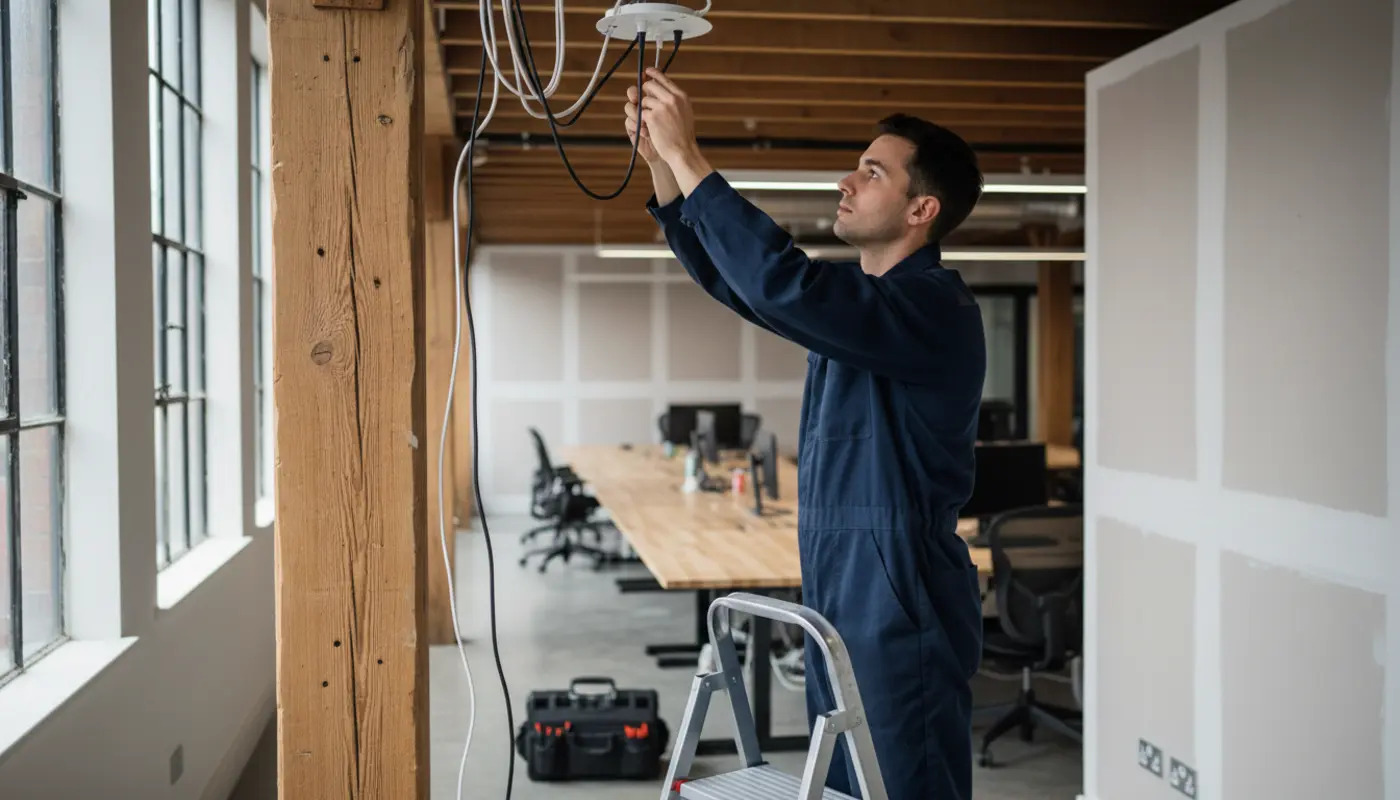
Structured cabling is installed to BS EN 50173 standards, labelled and fully tested. Handover documentation ensures future expansion is straightforward, whether adding more desks or integrating access control and monitored CCTV systems that meet EN 50131 requirements and qualify for a Police Response URN when installed by an SSAIB certified and Insurance Approved provider.
Final Thoughts
Setting up a small office network in Manchester does not need to feel daunting. With proper assessment, the right broadband choice and business grade equipment, it is possible to create a fast, secure and scalable system that supports daily operations without constant troubleshooting.
The aim is simple. Fewer interruptions, more productive staff and smoother client experiences. By planning for growth and prioritising security from the beginning, the office network becomes a reliable foundation that quietly supports the business every day.