Best LED Screen for Retail Window in Manchester | Expert Guide
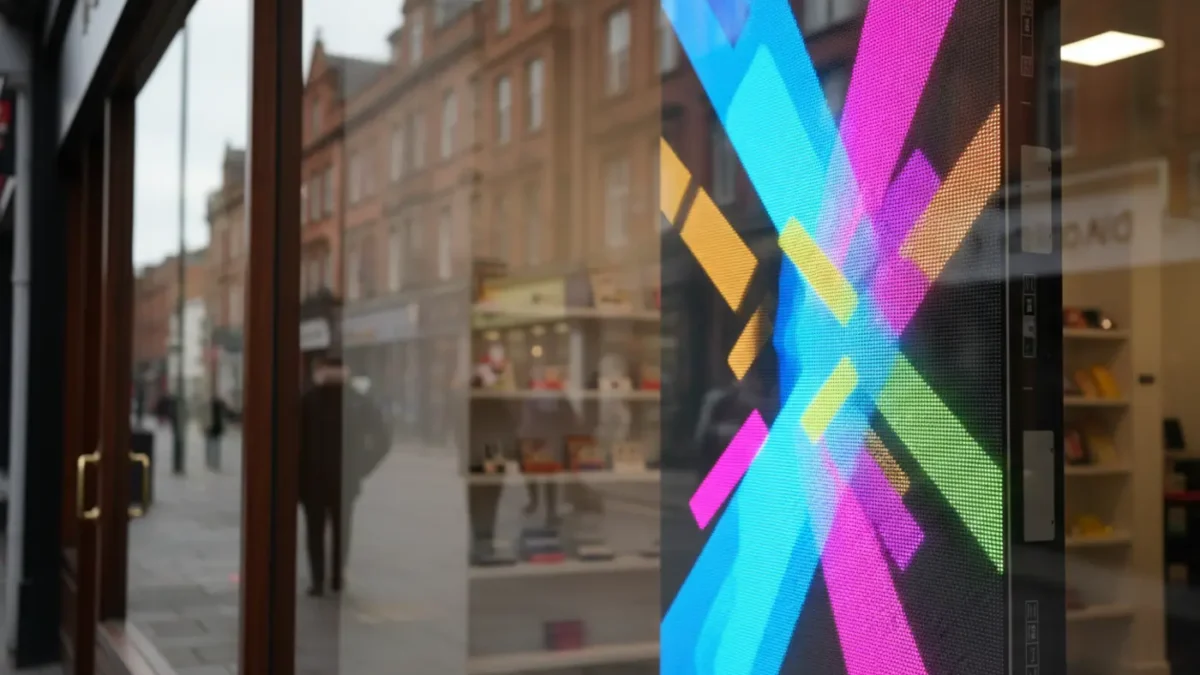
Manchester Retailers Switching To LED Window Screens
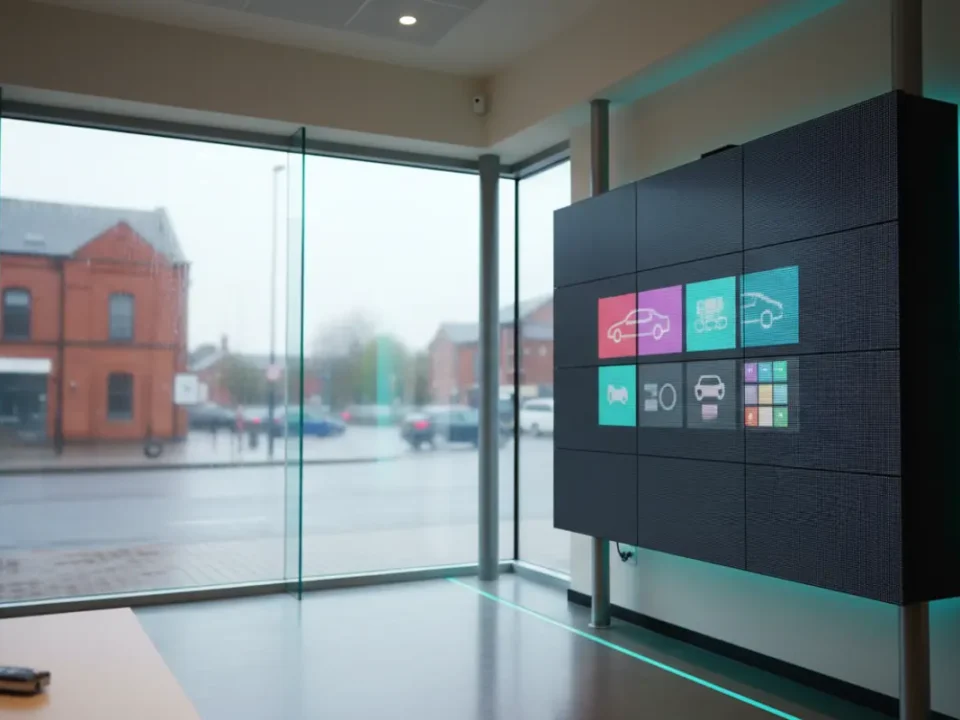
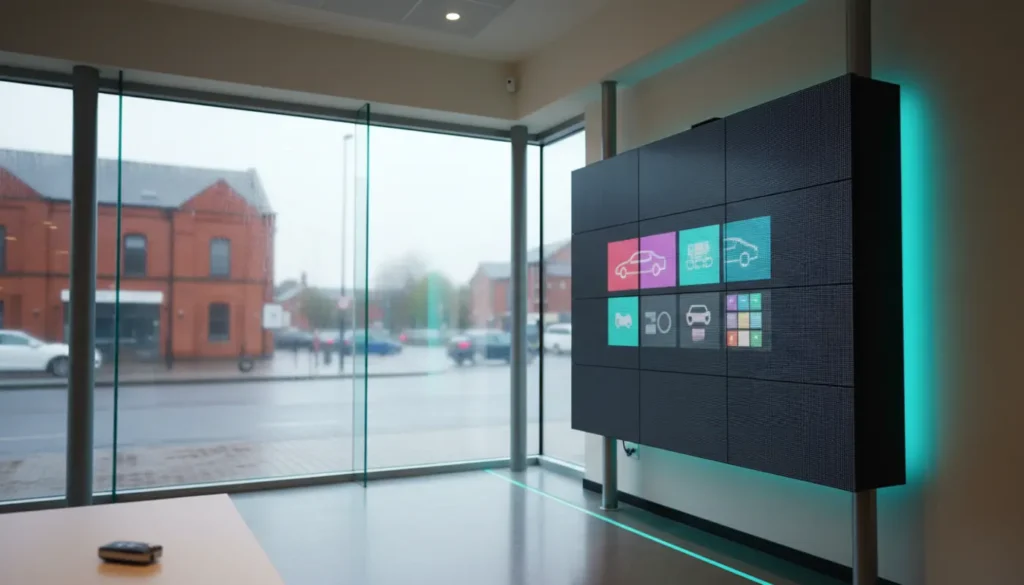
If you run a shop in Manchester, you already know how competitive Market Street, the Arndale and Piccadilly Gardens can feel. Some days it seems like everyone is competing for the same few seconds of attention. A static poster can quickly fade into the background, especially under grey skies and bright city lights. Choosing the best LED screen for a retail window in Manchester is no longer just about style. It is about standing out in a busy city centre.
That is why more retailers are investing in LED window screens this year. They want something dynamic, highly visible and flexible enough to update at any time. iSecurity Solutions is a trusted UK provider of commercial and domestic security systems, helping homes and businesses stay protected around the clock. Alongside CCTV, intruder alarms, fire safety, access control and construction site monitoring, our expert team also designs tailored digital screen installation for retail solutions that balance visual impact, compliance and sensible running costs without making the technology feel complicated.
Why Manchester Retailers Are Switching To LED Window Screens
Retail in 2026 is different. Customers expect movement, colour and clear messaging before they even step inside. Static signage still has a role, but it struggles to compete with motion graphics and short video clips that catch the eye within seconds.
Research into digital signage for retail stores shows measurable improvements in customer experience and sales uplift, as highlighted in a UK academic case study from the REF digital signage retail research. The key point is simple. Moving content attracts more attention and holds it for longer.
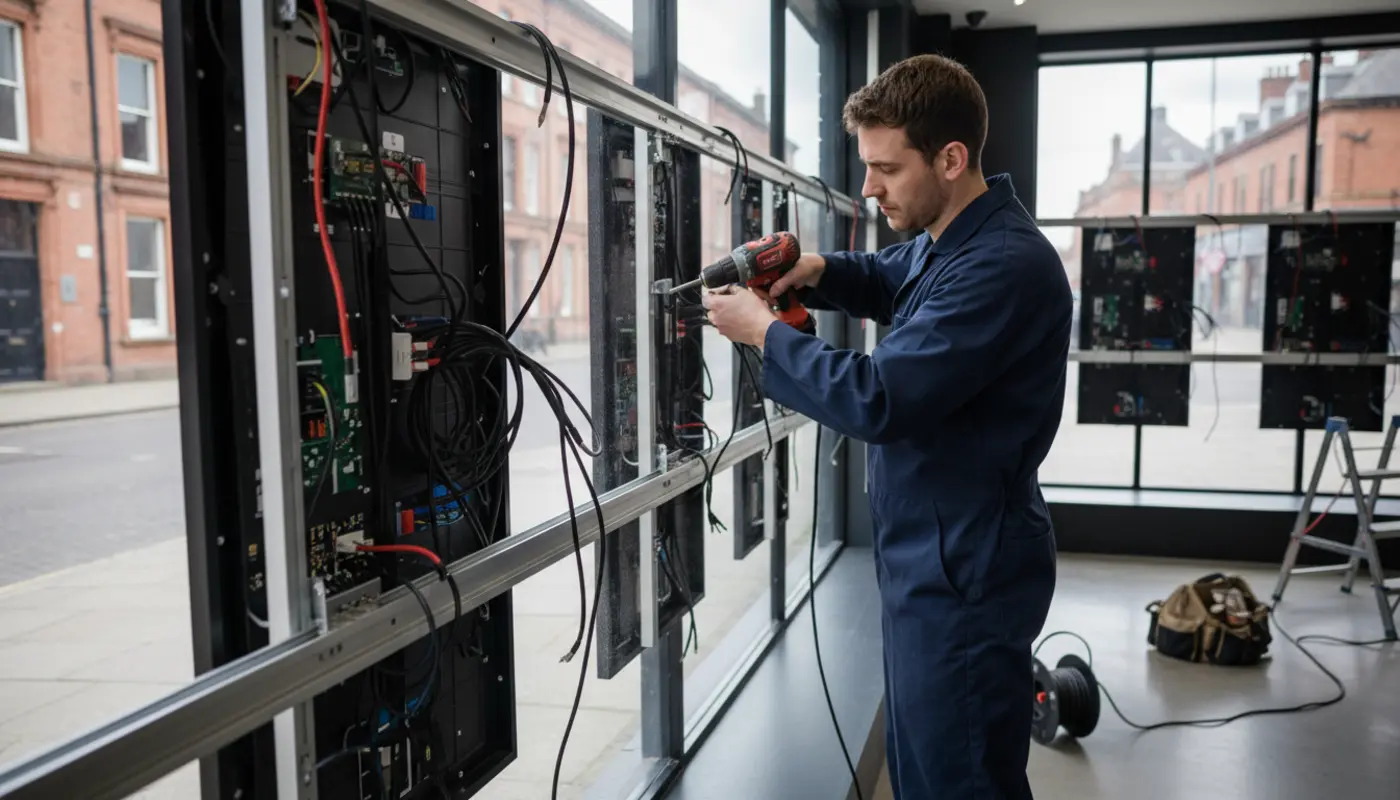
In practical terms, your shop window becomes a twenty four hour sales assistant. Even when you are closed, a well designed LED display can showcase new arrivals, promotions or brand stories. Many Manchester businesses also combine window displays with integrated CCTV systems and access control to create a modern and secure front of house setup.
If you are an independent retailer, you may wonder whether LED screens are only suitable for national chains. That is a fair question. The reality is that LED technology has become far more accessible, and creative content often delivers stronger results than large marketing budgets alone.
Choosing The Right Screen Specifications
When searching for the best LED screen for a retail window in Manchester, most retailers focus on three things. Visibility in all weather, clarity around planning rules and reassurance that energy bills will remain under control.
Brightness is crucial. A high brightness LED display, often rated at 3000 nits or more for outward facing screens, is designed to cut through daylight glare. In Manchester, where light levels can shift quickly, this ensures your message remains clear from across the pavement.
You may also hear suppliers mention pixel pitch. This simply refers to the distance between each tiny LED. The smaller the distance, the sharper the image looks from close up. For busy areas such as Deansgate or King Street, pitches like P3.9 to P7.8 are common because they offer a good balance between image clarity and cost.
Transparent LED screens are becoming popular with boutiques and fashion stores. They allow around 60 to 80 percent light transmission, meaning customers can still see into the shop while digital content appears across the glass. This combination of visibility and movement works particularly well in areas like the Northern Quarter.
Attracting Footfall In Manchester Hotspots
In high footfall locations such as the Trafford Centre and Spinningfields, you often have only three to five seconds to make an impression. Content should therefore be clear and focused rather than crowded.
- One strong message
- Bold imagery
- Clear pricing
- A simple call to action
Retailers with multiple locations often connect their window screens to a central control platform. Experience with digital signage networks for shopping centres shows that cloud based management keeps branding consistent while still allowing local updates for Manchester events and seasonal campaigns.
Planning Permission And Advertising Consent In Manchester
Before installing any illuminated screen, it is important to consider planning requirements. In the UK, advertisement consent is often required for signs larger than 0.3 square metres, and illuminated signs of any size usually need approval. The national framework is clearly explained on the Planning Portal guidance on adverts and signs.
If your property is in a conservation area or is a listed building, additional consent may be necessary. Councils assess visual impact, light spill and how fixings affect the building. Seeking advice early can prevent delays and unexpected costs.
CAP Code And UK Advertising Standards
The content displayed on your LED screen must follow UK advertising rules. Government guidance explains that businesses must comply with the CAP Code for non broadcast advertising, covering accuracy and honesty.
If you claim to offer the lowest price in Manchester or promote environmental benefits, you must have evidence to support those statements. Any qualifications should be clearly readable on screen. Keeping messages factual and transparent protects both your customers and your reputation.
Energy Efficiency And Running Costs
Energy costs remain a key concern for retailers. In the North West, business electricity rates are often in the mid twenties pence per kWh range, depending on the contract.
To estimate running costs, multiply the screen wattage by the number of operating hours and then by your unit rate. For example, a 600 watt screen running 14 hours per day uses 8.4 kWh daily. At 24 pence per kWh, this works out at just over two pounds per day. For many shops, that is less than the value of a single additional sale.
Modern LED systems also include automatic brightness adjustment. This reduces output during darker hours, saving energy and helping you remain compliant with local guidance on glare.
How Independent Shops Compete In 2026
Independent retailers in Manchester are not trying to copy large brands. They want to stand out in their own way. LED window screens allow you to showcase behind the scenes content, local partnerships and event announcements in a format that feels lively and authentic.
Combining your display with high quality in store audio, such as speaker systems for retail, can create a connected experience that feels modern while still welcoming.
Measuring Return On Investment
Return on investment is often the deciding factor. If a boutique invests twenty thousand pounds in a high brightness LED window display including installation, and experiences a five percent increase on monthly revenue of forty thousand pounds, that equates to an additional two thousand pounds per month. Even after allowing for content updates and electricity costs, payback can arrive sooner than expected.
Tracking footfall, conversion rates and average basket value before and after installation helps you understand the real impact. Treat the screen as a strategic marketing tool rather than just an attractive feature.
Choosing A Trusted UK Installation Partner
When selecting a supplier, look beyond the hardware itself. Clear warranties, ongoing maintenance and a strong understanding of Manchester planning requirements are essential.
- Transparent warranty terms
- Reliable maintenance support
- Compliance with relevant British Standards where security elements are involved
- Experience with local authority expectations
If your project also includes intruder alarms or monitored CCTV, ensure these systems meet EN 50131 grades where applicable and are installed by an SSAIB certified and Insurance Approved provider to qualify for a Police Response URN. Retailers who already use a business security system installation service often prefer a single trusted company to manage screens, CCTV and access control together, keeping documentation organised and support straightforward.